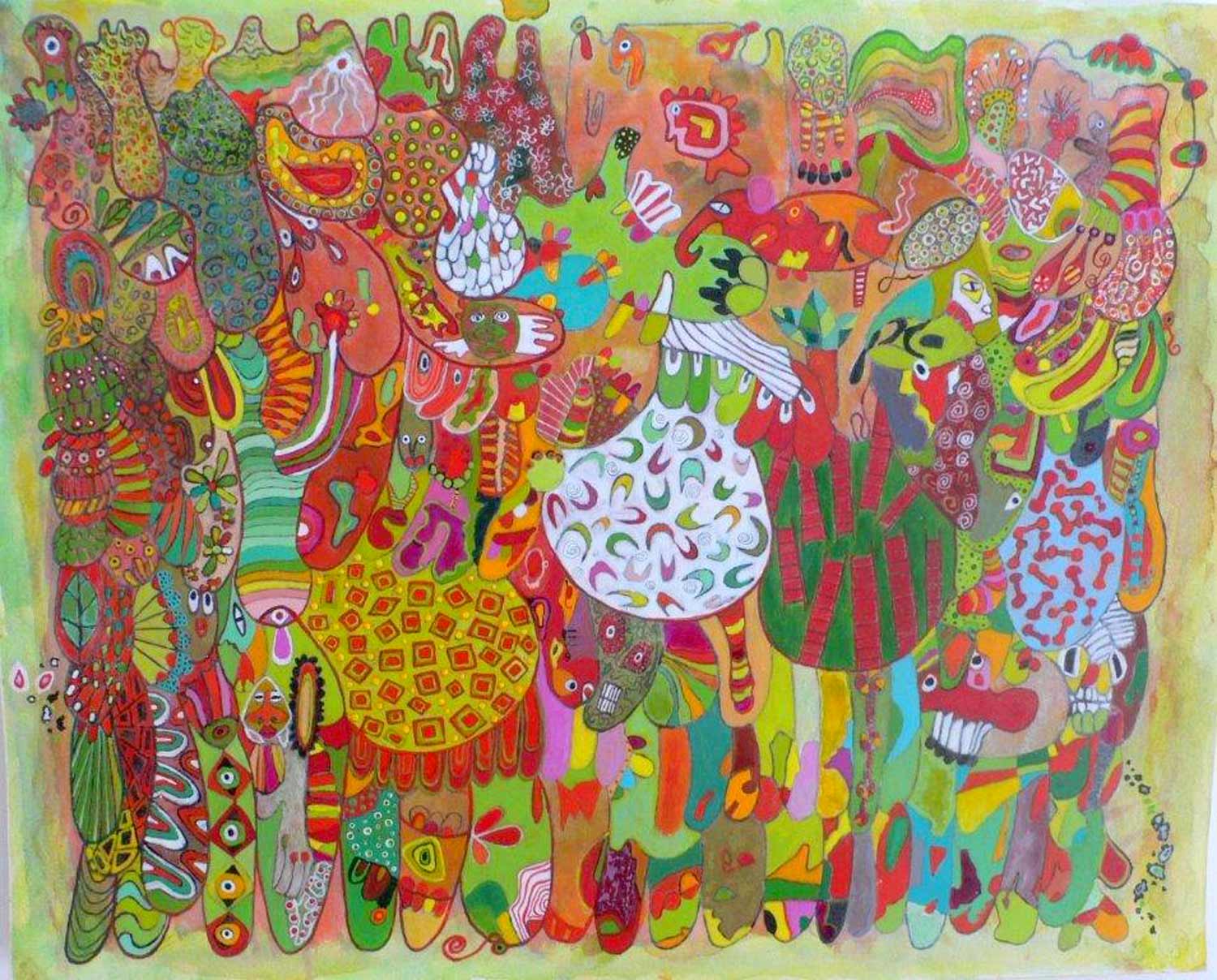
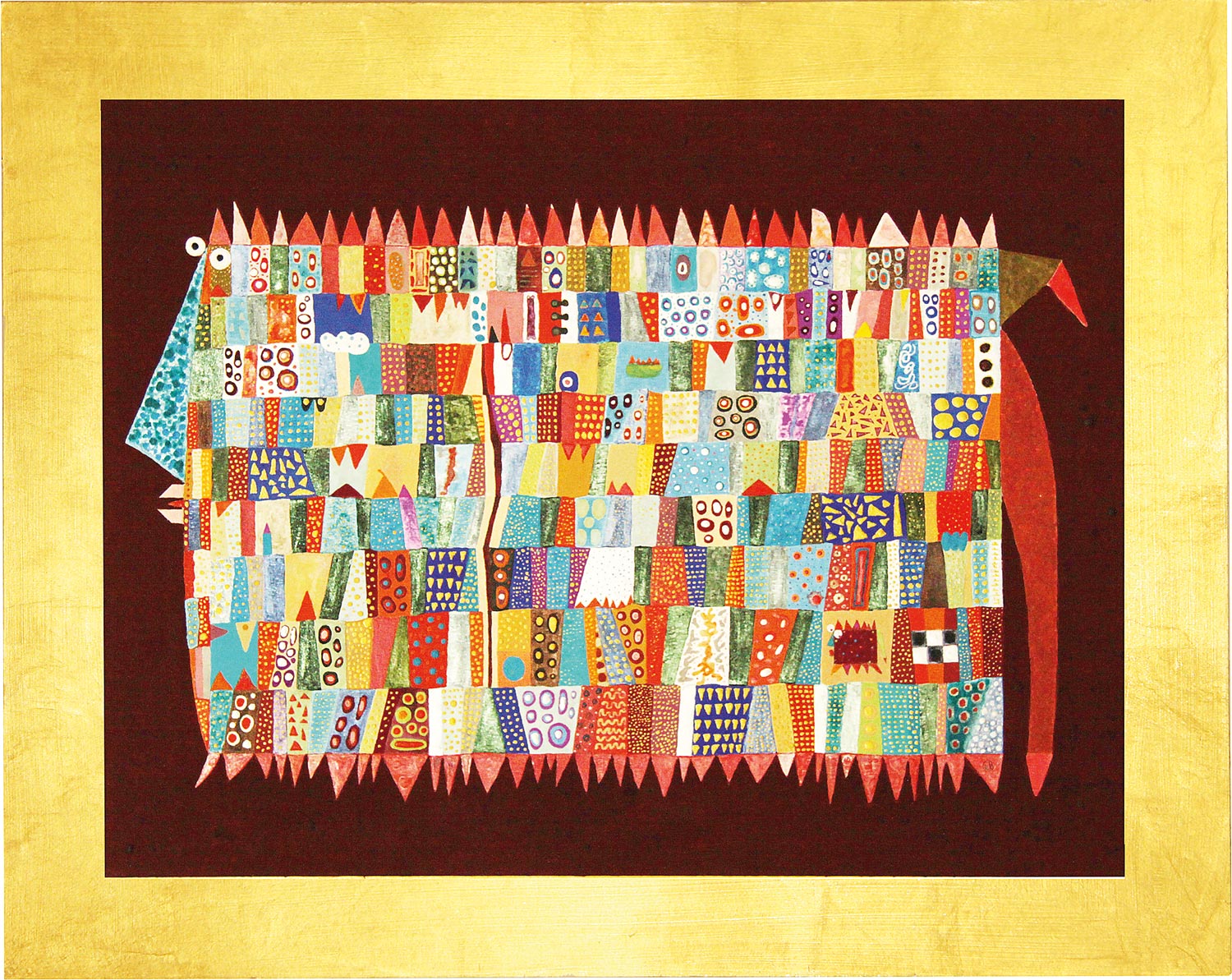
Aquarell auf Karton, 39 x 45 cm, 2007
Aquarell auf Karton, 39 x 45 cm, 2007
Ohne sich an Normen zu halten, kreiert Rupert Schroeder ein chromatisches Werk, gefüllt von großer Vorstellungskraft, Lebhaftigkeit, Farbe und Licht.
(Carmen Portolés, Museum Juan Cabré, Calaceite)
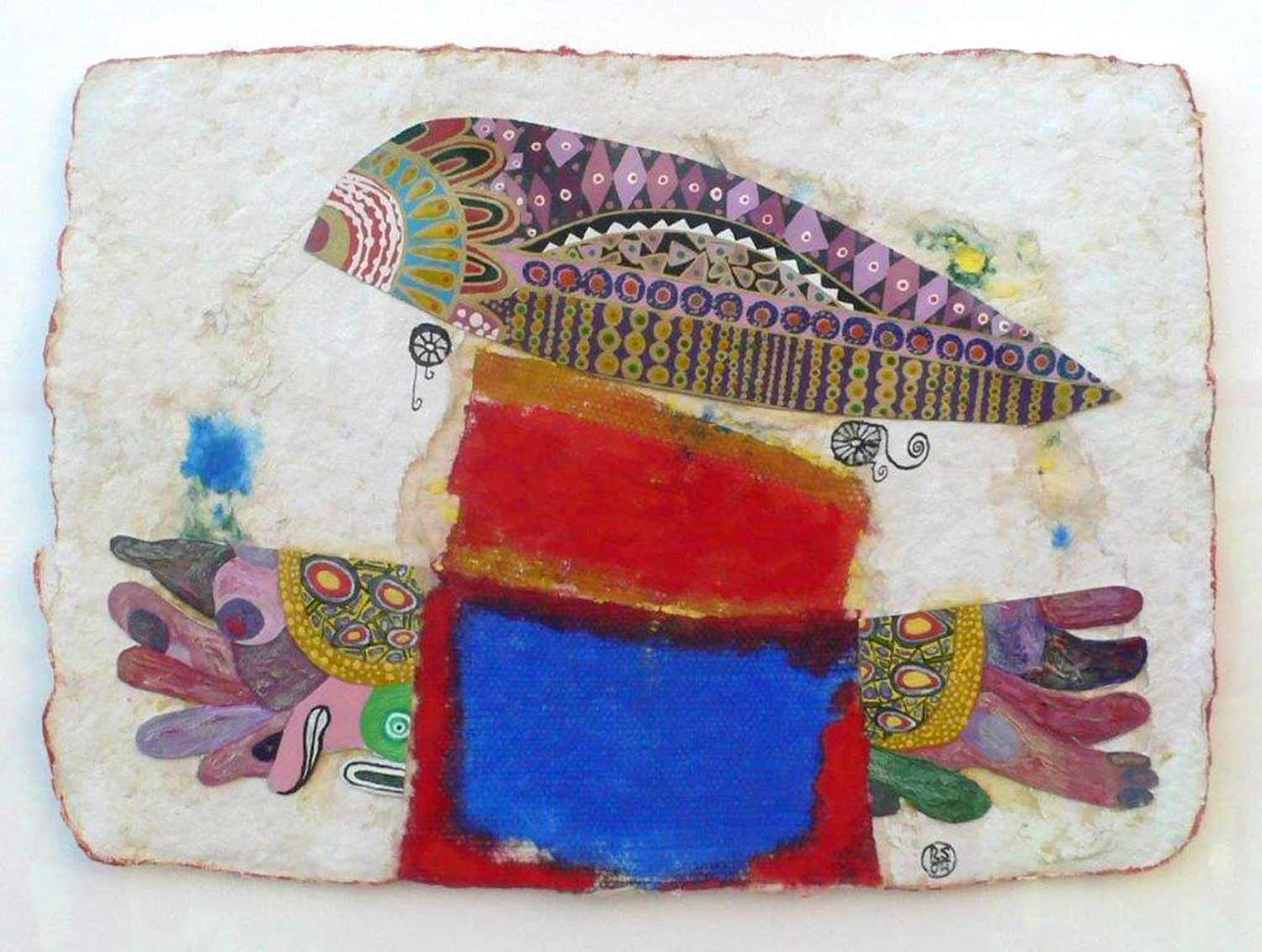
Collage und Pigmente auf handgeschöpftem Bütten, Museumsglas, 32 x 37 cm, 2004
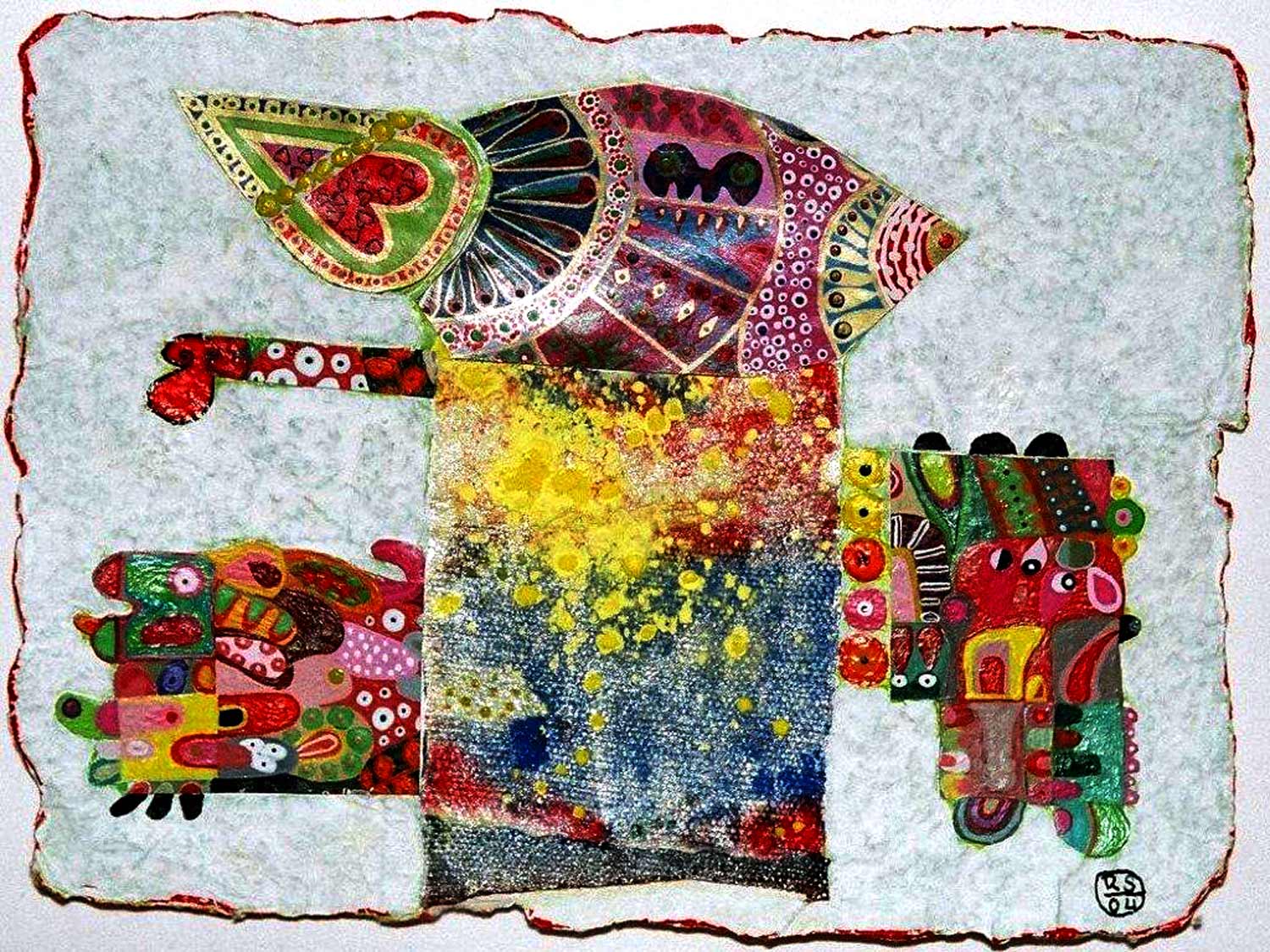
Collage und Pigmente auf handgeschöpftem Bütten, 32 x 37 cm, 2004
objetos de oro – Pintura en el oro
gold objects – painting on gold
Morgenstund hat Gold im Mund – Reden ist Silber, Schweigen ist Gold – das Handwerk mit goldenem Boden – ein Quentlein Gold wiegt mehr als ein Zentner Recht – nicht alles ist Gold, was glänzt – Gold wert sein – treu wie Gold – die goldene Mitte – der goldene Schnitt … Gold: Selten, beständig, unvergänglich und seit Menschengedenken begehrt.
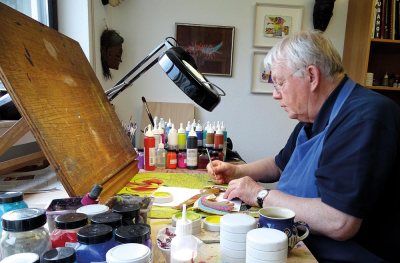
Das große Fenster öffnet den Blick in den schönen Garten. Es ist ruhig, friedlich, leise … nichts stört die Konzentration. Der Tisch gefüllt mit Pigmentdosen, Farben, Malmitteln, Pinseln und vielem mehr. Rupert Schroeder sitzt in seinem Atelier, nimmt die Umgebung kaum wahr und arbeitet. Arbeitet versunken und wird eins mit seinem Werk. Das ist weiter nicht ungewöhnlich in einem Atelier, bis man einen Werkstoff auf dem Tisch entdeckt, der in der heutigen Kunst kaum zu finden ist: Ein vergoldeter Körper, der in Kürze mit dem Malgrund zum Objekt vereint wird. Gold und Kunst? Rupert Schroeder hat sich der Auseinandersetzung mit Gold als Werkstoff und Ausdrucksmittel gestellt. Mehr noch: Er hat Gold zum zentralen Thema seiner Arbeiten gemacht. Ein Tabubruch?
Gold wird in Verbindung mit Kunst in der heutigen Zeit im Allgemeinen abgelehnt. Viele namhafte Künstler haben sich immer wieder daran versucht. Gold ist nicht nur mit Sprichwörtern belegt, es gilt ebenso als zu schön, zu kunsthandwerklich, zu kirchlich und als nicht wirklich ernstzunehmend in einer künstlerischen Auseinandersetzung. Gold verträgt sich durch sein immenses Eigenlicht kaum mit der Eigenwirkung anderer Farben und erdrückt durch seine Dominanz. Ein Werkstoff welcher, eine Ausnahmeerscheinung in seiner Beständigkeit und dem nicht nach lassen seines Glanzes ist.
Die Dominanz des Werkstoffes war der Reiz, der Rupert Schroeder faszinierte. Er wollte versuchen etwas zu verändern, sich dem Gold und seinem Mythos nähern, es in seine Farben und Werke integrieren und seine unveränderlichen Eigenschaften in die Gesamtwirkung seiner Arbeiten einzubinden. Die kritische Auseinandersetzung mit changierenden Farben war schon lange Thema seiner Kunst. Nun lag der Reiz darin dem Gold eine neue Wirkung im Verbund mit anderen Farben und Darstellungen zu geben.
Die reine Fläche schien dabei zu begrenzt, eine Halbplastik sollte es sein. So entstand zu Beginn der Entwurf eines Buchenblattes, in der Größe von ca. 20 x 10 cm. Aus dem Entwurf wurde ein Holzobjekt gefertigt, das wiederum beim Vergolder mit 24 Karat blattvergoldet wurde. Die Arbeitsphase des Vergolders nutzte Rupert Schroeder sich dem Malen des Objektgrundes zu widmen, auf dem später das vergoldete Blatt seinen zentralen Platz finden würde. Auf hellem Grund entstand ein changierendes farbiges Blätterspiel, auf dem sich Malerei und Plastik unter Museumsglas in einem Bildkasten ergänzen konnten.
Dieses Bildobjekt „das Blatt“ fand seinen Platz im Wohnraum. Der Künstler konnte Abstand gewinnen und das Werk immer wieder von dem gegenüberliegenden Sofa im Gegenlicht betrachten. Mitte Juli, etwa gegen 17.00 Uhr, bemerkte er, dass die Sonne schwächer wurde und das Tageslicht nachließ. Der Blick wanderte immer wieder zum Bild, bei dem er mit großer Verwunderung ein Wechselspiel der Glanz- und Lichtveränderung bemerkte. Vom Rand in die Mitte und wieder zurück wanderte ein hypnotisches Licht, dass Bild und Bildwirkung veränderte, das Blattwerk des Untergrundes verschwinden lies und mit der Dämmerung allein das Goldobjekt für den Betrachter übrig ließ. Von diesem lichtverändernden Vorgang beeindruckt, hängte er am nächsten Tag ein zweites Bild, den Läufer, an gleiche Stelle und konnte auch hier die lebendige Veränderung des Bildes, durch Tageslicht und Uhrzeit beeinflusst, verfolgen. In einer Zeit, in der Lichtinstallationen die Museen erobern, Leuchtreklamen unseren Weg säumen, Straßenlaternen den ungetrübten Blick in die Sterne stören, wurde sich Rupert Schroeder so in seinen Arbeiten dem natürlichen Licht bewusst, dessen Wirkung er sich nun nicht mehr entziehen wollte. Beeindruckt von der Erkenntnis arbeitete er von nun an, um Goldobjekte, Malgründe und inhaltliche Auseinandersetzungen zu kombinieren und deren Ideenvielfalt und Wirkungen beim Betrachter arbeiten zu lassen.
Stehen die intensiven Farben der Malgründe in Konkurrenz zum Gold? Ergänzen sie sich und verstärken ihre Wirkung oder ist Gold zu Ton angebend? Wie arbeitet unser vorgeprägtes Verhältnis zum Gold, wenn wir Exponate betrachten, dem das seltene, beständige, unvergängliche und begehrte Metall einen Ausdruck schenkt, der die gewohnte Wertigkeit verändert.
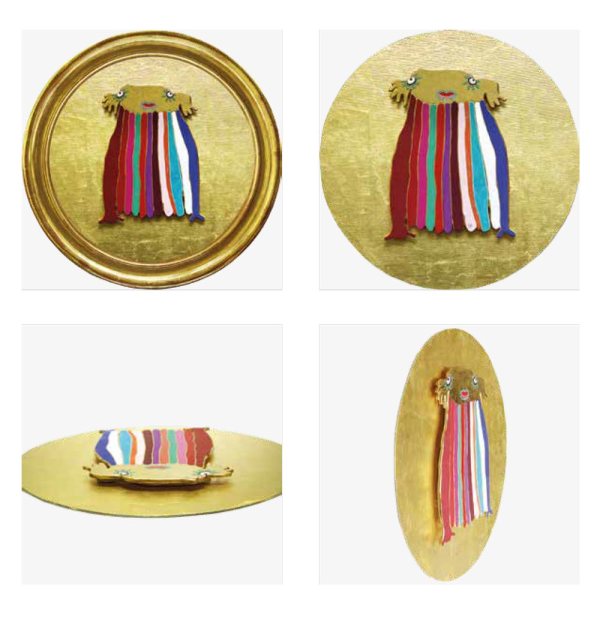
Die Werkgruppe „Goldobjekte 24 Karat“: In diesem Katalog werden überwiegend 40 handvergoldete Holzobjekte dargestellt, Durchschnittsgröße zwischen 15 + 35 Zentimetern. Sie „schweben“ etwa 12 mm über dem Träger, einem Malgrund, der in Verbindung mit dem Motiv steht. Jedes Objekt ist ein Unikat. Die Träger der Objekte sind auf Stahl, MDF Platte, Leinen auf Karton, in der Hauptsache jedoch auf schwerem handgeschöpftem Büttenpapier mit haptischer Oberfläche. In der Malerei finden überwiegend von Hand angerührte hochpigmentierte Farben Anwendung. Objekte und Malgründe in Bildkästen, bis zu einer Größe von 75 x 75 cm, durch Museumsglas geschützt. Die malerische Gestaltung umfasst gegenständliche, meist figurativ, inhaltsbezogene Malweisen.
Anna Schmidt
• 1935 Rupert Schroeder nació en Essen. Actualmente vive en España y Alemania.
• 1941 Guerra / Se muda a Oberried /Brisgovia.
• 1945 Diversos institutos e internados.
• 1955 Escuela de arte Lünen / Dortmund. Alumno de Gustav Deppe.
• 1956 Emigración a Canadá, todo tipo de actividades en mar y en tierra.
• 1961 Regreso a Alemania, Hofa . Bad Reichenhall, marinera cristiana, marina mercante 4 años.
• 1966 Matrimonio con Renate Elisabeth nació Mertens , 42 años … increíble. Adopción de las dos hijas Monicque e Iris.
• 1967 Adquisición de una grande empresa gastronomoca en la ciudad de Düsseldorf.
• 1977 Creación de una galería de arte contemporáneo en Dusseldorf.
• 1988 Arte Reciclado o (principio del retroceso), activación de proyectos varados u olvidados de arte. Funda con un socio ARTAX Kunsthandel Dusseldorf.
• 1991 Adquisición y ampliación de una casa histórica en Calaceite / Aragón / España.
• 1994 Venta de su parte de la firma en condiciones justas a mi socio. La compañía todavía existe hasta hoy.
• 1995 Edita gráficos, películas y trabaja con múltiples artistas famosos, apoya el trabajo de su esposaen la galería.
• 2003 Su esposa se enferma gravemente, comienza de nuevo con ilustraciones a todo Color.
• 2006 El cierre de galerias de Colonia y Moenchengladbach.
• 2007 Muerte de su esposa.
• 2014 Exposición individual, Museo JUAN CABRÉ Calaceit / Teruel. Catálogo.
• 2014/16 Creación de objetos de madera y semiplástico impresos en 24 quilates de oro. Pintura sobre 24 quilates de oro.
• 2014/16 Production of 24 carat hand-gilded, half sculpture wooden objetcs. Painting on 24 carat gold foil.
La alegría todo lo convierte en oro – La palabra es plata, el silecio es oro – Una llave de oro abre todas las cerraduras – No todo lo que brilla es oro – El oro hace poderoso, pero no dichoso. Aunque la jaula sea de oro, no deja de ser prisión. El oro luce, y la virtud reluce… Oro : Escaso , resistente , indestructible y deseado desde tiempos inmemoriales .
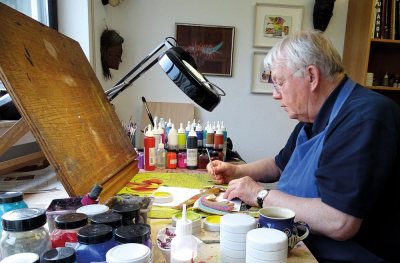
Desde una gran ventana se avista un hermoso jardín. Es un lugar tranquilo , pacífico, silencioso… nada perturba la concentración. La mesa llena de latas de pigmentos , cepillos, colores, repleta de utensilios de pintura. Rupert Schroeder está sentado en su atelier, apenas percibe su entorno, está trabajando. Está absorto en su obra , volviéndose uno con su trabajo. Una escena muy normal para un atelier, hasta que uno descubre el material con el que está trabajando sobre la mesa. En la actualidad este material apenas se utiliza en el arte: Un cuerpo dorado, que en breve se unirá a la superficie de una pintura, convirtiéndose en un solo objeto. ¿El Oro y el Arte? Rupert Schroeder ha decidido explorarlo como material de trabajo y medio de expresión. Más aún: El a hecho del oro el tema central de su obra. ¿La ruptura de un tabú?
El uso del oro en las obras de arte es rechazado por el mundo actual en general. Muchos artistas famosos lo han intentado en varias ocasiones. El oro está demasiado relacionado a refranes, es considerado también demasiado hermoso, muy ligado a la artesanía y a la iglesia, y por ende descartado para la exploración artística . La intensidad de su propia luz lo hace incompatible con el efecto de otros colores, que quedan opacados por su dominio. Un material que es único por su resistencia y también por la naturaleza perene de su brillo.
La dominancia del material fue lo que encantó a Rupert Schroeder. Quería intentar cambiar algo, acercarse al oro y su mito integrando su brillo y características inmutables en el efecto total de su obra. Pasó mucho tiempo explorando los colores iridiscentes en su arte. Ahora, para él, el atractivo reside en provocarle un nuevo efecto a este material, combinándolo con otros colores y motivos.
La superficie pura era muy limitante, por lo que decidió que también usaría plástico. Fue así como al comienzo surgió el diseño de una hoja de madera de haya de aproximadamente 20 x 10 cm.
A partir de este modelo fue elaborado un objeto de madera, que a su vez fue impreso en oro de 24 quilates. Durante el proceso de impresión de oro Rupert Schroeder se dedicó a pintar el fondo sobre cuyo centro, se colocaría la hoja dorada.
Sobre un fondo claro surge un juego de hojas de colores iridiscentes, que dan un cuadro en el que se mezclan y comlementan lo plástico y la pintura.
La obra „La hoja“ fue colgada en la sala del artista. Por esta razón le fue posible analisar las diferentes perspectivas del cuadro. A mediados de julio , alrededor de las 17:00 en punto, se dio cuenta de que el sol era más débil y la luz del día se suavizaba. Sus ojos se desplasaban de nuevo sobre la imagen, en la que con gran asombro observó una interacción de brillo y cambio de luz . Una luz hipnótica viajaba desde el borde hasta el centro y viceversa haciendo desaparecer el fondo del cuadro y recalcando solamente la hoja dorada. Entonces, durante el amanecer, lo único que era visible para el espectador era la figura dorada. Impresionado por el cambio de luz , colgó al día siguiente, otro cuadro, („Corredor“) en el mismo lugar , y pudo analisar también aquí el cambio de la imagen influenciado por la luz del día.
En una época en la que las instalaciones de luz han conquistado los museos, las señales de neón invaden nuestras ciudades y las luces de la calle nos impiden visualizar las estrellas, Rupert Schroeder internalizó mediante su trabajo la importancia de la luz natural. Desde entonces no quiere prescindir de ella. Desde que hizo este descubrimiento ha intentado mezclar objetos de oro, fondos y diferentes motivos para plazmar las ideas y efectos distintos, que se pueden dar trabajando con luz natural.
¿Compiten los colores intensos del fondo con la fuerza del oro? ¿Se complementan y potencian su efecto o es el oro el material dominante en la obra?
¿Qué pasa con nuestra percepción pre-condicionada del oro, si a este raro,codiciado e imperecedero metal se le da otra expresión? ¿Puede una obra de arte cambiar el valor que le hemos adjudicado a este material?
El grupo “Objetos de oro 24 quilates”: En este catálogo se muestran 40 objetos de madera impresos en oro, tamaño medio de entre 15 + 35 centímetros.
Ellos „flotan“ sobre 12 mm por encima del soporte, una superficie, que se conecta con el motivo. Cada objeto es único. Los soportes de los objetos están sobre acero, tableros de MDF, lienzos sobre cartón, en su mayor parte sobre papel de tina con superficie háptica. En la pintura encontramos sobre todo el uso de tintas pigmentadas mezcladas a mano. Objetos y sus fondos enmarcados, hasta un tamaño de 75 x 75 cm, protegidos por vidrio.
El diseño pictórico comprende técnicas figurativas que aportan contenido utilizando formas concretas.
„Pequeños jardineros„ – también pequeño jardinero.
„La hoja“ – también la hoja dorada.
„Escencias secretas“ – otorga protección mágica.
„Películas en mi mente“ – pensamientos en un día.
„Animal doméstico„ – la representación de un animal mítico de casa.
„early bird“ – varios significados, el primer satélite en 1997 EE.UU., (madrugadores ) entre otros.
„Un momento por favor“: mira a la Cara.
„El reflejo del espejo“ – espejo.
„El chamán“ – hombre de medicina.
„Ella transmite propiedades en el lago“
„Asteroide B 612“ – el hogar del Principito.
„Mandrágora“ – la planta mágica, las raíces a veces son similares a los humanos.
„Abejón sobre paisaje vigilado“.
„Espíritu protector frente a muro“.
„Máscara“ – máscara de arbusto según Ngere Liberia.
„Corredor“ – bolsas árabes- Kelim.
„Paleta“ – en lugar de la tinta que queda en la paleta,
9 tipos diferentes de oro.
„El rey almeja“ – personaje de cuento de hadas.
„Serenata de luz de luna“ – Glenn Miller.
„Optimista en la niebla“ – (Según Wolfgang Schmidbauer).
„Pequeña salamandra de jardín“.
„Goldnas“ – la nariz de un increíble falsificador de arte.
„Carta a un paisaje“ – carta de un habitante de ciudad a su otro hogar.
• 1935 Born in Essen, Germany. Lives in Spain and Germany today.
• 1941 War / Relocation to Oberried / Breisgau (Southern Germany).
• 1945 Various grammar schools and boarding schools.
• 1955 Art School Lünen / Dortmund with class Gustav Deppe.
• 1956 Emigration to Canada, all sorts of occupations at sea and on land.
• 1961 Return to Germany, Hofa. Bad Reichenhall (Bavaria), Christian cruise, Merchant navy 4 years.
• 1966 Married Renate Elisabeth born Mertens, 42 years … great!
Adopted her two daughters Monicque and Iris.
• 1967 Takeover of a large gastronomical company of the city of Düsseldorf.
• 1977 Formation of a gallery for contemporary art in Düsseldorf.
• 1988 Art Recycling or (reversing principle), activation of art stocks that had been left behind or were out of focus, various dealers. Offered, conveyed and sold to other art dealers by the use of a Spartan sales listing. Together with his partner he founds the ARTAX Art Dealership Düsseldorf.
• 1991 Purchase and Expansion of a historic house in Calaceite / Aragon / Spain.
• 1994 Sale of own shares of the company to my partner under fair conditions. Company still exists today.
• 1995 Edits graphs, films, and multiple other works of renowned artists, supports his wife’s gallery work.
• 2003 Wife falls seriously ill. Resumption of own colored statements.
• 2006 Discards galleries in Cologne and Mönchengladbach.
• 2007 Passing away of wife.
• 2014 Solo Exhibition, JUAN CABRE Museum Calaceit / Teruel. Catalog.
• 2014/16 Production of 24 carat hand-gilded, half sculpture wooden objets. Painting on 24 carat leaf.
To have a heart of gold – Silence is golden, speech is silver – All that glitters is not gold – Gold is part of a plot – What is gold is worth gold – What can gold not do? – the golden middle – the golden cut … Gold: rare, resistant, everlasting and desired since the dawn of mankind.
The big window reveals the beautiful garden view. It is tranquil, peaceful, quiet … nothing disturbs the concentration. The tabletop is filled with paints, cans of pigment, painting materials, brushes and so much more. Rupert Schoeder sits in his studio, barely taking in his surroundings, working. Lost in his work, he becomes one with his creation. Not an unusual scene in a studio. But looking closer you will find a material rarely used in today’s art: a gilded figure, shortly to be united with the canvas to form an object. Gold and art? Rupert Schroeder has faced the challenge of using gold as a working material and as means of expression. More over; he has put gold into the center of his work. Braking a taboo?
In today’s time, the combination of gold and art is commonly rejected. Many renowned artists have attempted this blend. Gold is not only referred to in proverbs, it is also
considered too beautiful, too crafty, too churchy; not really to be taken serious in an artistic debate. Gold emits light to such an extend, that it is barely compatible with other colors. It’s dominance crushes their effect. Its consistency and the continuity of its shine make gold an exceptional material.
It was material’s dominance that charmed and fascinated Rupert Schroeder. He attempted a change, approaching gold and its myth by integrating it into his colors and works. He wanted to integrate the immutable characteristics of gold into the cumulative effects of his work. The critical dispute with iridescent colors has long been a subject in Schroeder’s art. Now the appeal lay in giving gold a new effect in combination with other colors and illustrations.
However, a pure surface seemed too limited. It had to be a semi-sculpture. And that is how the draft of a beech leaf originated – sized approximately 20 x 10 cm. The draft was crafted into a wooden object which the gilder coated in 24 carat gold. During the gilding phase Rupert Schroeder dedicated his time to painting the base of the object, on which the gilded leaf would later be placed. A bright colored base resembling iridescent foliage was
created. On this painting and sculpture would compliment each in a picture box covered with museum glass.
This image-object “The Leaf” found its place in the living area. The artist gained some distance and repeatedly observed his backlit work from the couch across the room. In mid July around 5 pm he noticed the sun had gotten weaker and daylight was reclining. His eyes kept returning to the picture, where he noticed an interplay between brilliance and light that caused him great amazement. A hypnotic light moved from the edge to the middle and back again, changing the picture and its effect. The foliage of the base disappeared in the twilight, leaving only the golden object to be seen by the observer. Impressed by this light changing process, he hung up a second painting the following day. Hanging on the same spot, “The Runner” also showed the same lively changes influenced by daylight and time of day. In times, where more and more light installations are finding their way into museums, luminous advertisement is lining our roads, and streetlights blur our clear view of the stars, Rupert became aware of natural light in his works. He no longer wanted to withdraw from this impact. Impressed by this insight, he now worked on combining gold objects, canvasses and contextual debate and letting the variety of ideas and effects work on the observer.
Do the bright colors of the painting surfaces compete with the gold? Do they complement each other and intensify their effects? Or does gold set the tone? How does our pre-conceived relationship to gold work, when we look at exhibits that embody this resistant, everlasting, and desired metal, capable of changing the familiar valance?
The Collection “Golden objects 24 Carats”: This catalogue mostly portrays 40 hand-gilded wooden objects, average size between 15 and 35 cm. They “float” above a carrier at approximately 12 mm, a painting surface that relates to the motiv. Every piece is unique. The supporters are on steel, wood fiberboard, linen on carton, mainly however, on heavy handmade vat paper with a haptic surface. Manually blended, highly pigmented dyes are predominant in the paintings. Sculptures and canvasses in picture boxes, up to a size of 75 x 75 cm, protected by museum glass. The artistic design includes graphic, mostly figurative, contextual manners of painting.
“Garden Plot Holder” – or small Gardener.
“Secret Essences” – conveys magical protection.
“Head-Cinema” – Thoughts of a Day.
“Pet” – Portrayal of a Mythical Animal made of Houses.
“Golden Mountain in the Garden”.
“Early Bird” – various meanings: first satellite 1997 USA, early riser, and more.
“un momento por favor”: mira a la cara “One Moment Please”: look her in the face.
“The SquarE” – every piece on the surface gilded differently.
technical execution / workmanship Ludwig Dunkel.
“She conveys property by the sea”.
“Asteroid B 612” – Home of the Little Prince.
“Mandrake” – magic plant, roots at times resemble humans.
“Chard” – (in German) „Mangold“.
“Information-Drone in front of guarded carpet landscape”
“Helpful spirit in front of wall”.
“Mask” – Bush-mask inspired by Ngere Liberia.
“Runner” – Camel pockets – Kelim.
“The Pose that Refreshes” – (Note of interpretation) the pause that refreshes. Old Coca-Cola slogan.
“Palette” – instead of remains of paint on the palette, 9 different types of gold.
“The Seashell-King” – Fairytale-figure.
“Moonlight Serenade” – Glenn Miller.
“Optimist in the Mist” – (Inspired by Wolfgang Schmidbauer).
“Plumbers Sundays Bowler” – Compound of Gold and Palladium.
technical execution / workmanship Ludwig Dunkel.
“Goldnas” – An Amazing Art Forger’s Nose.
“Letter to a Landscape” – Letter from a townsman to his other home.
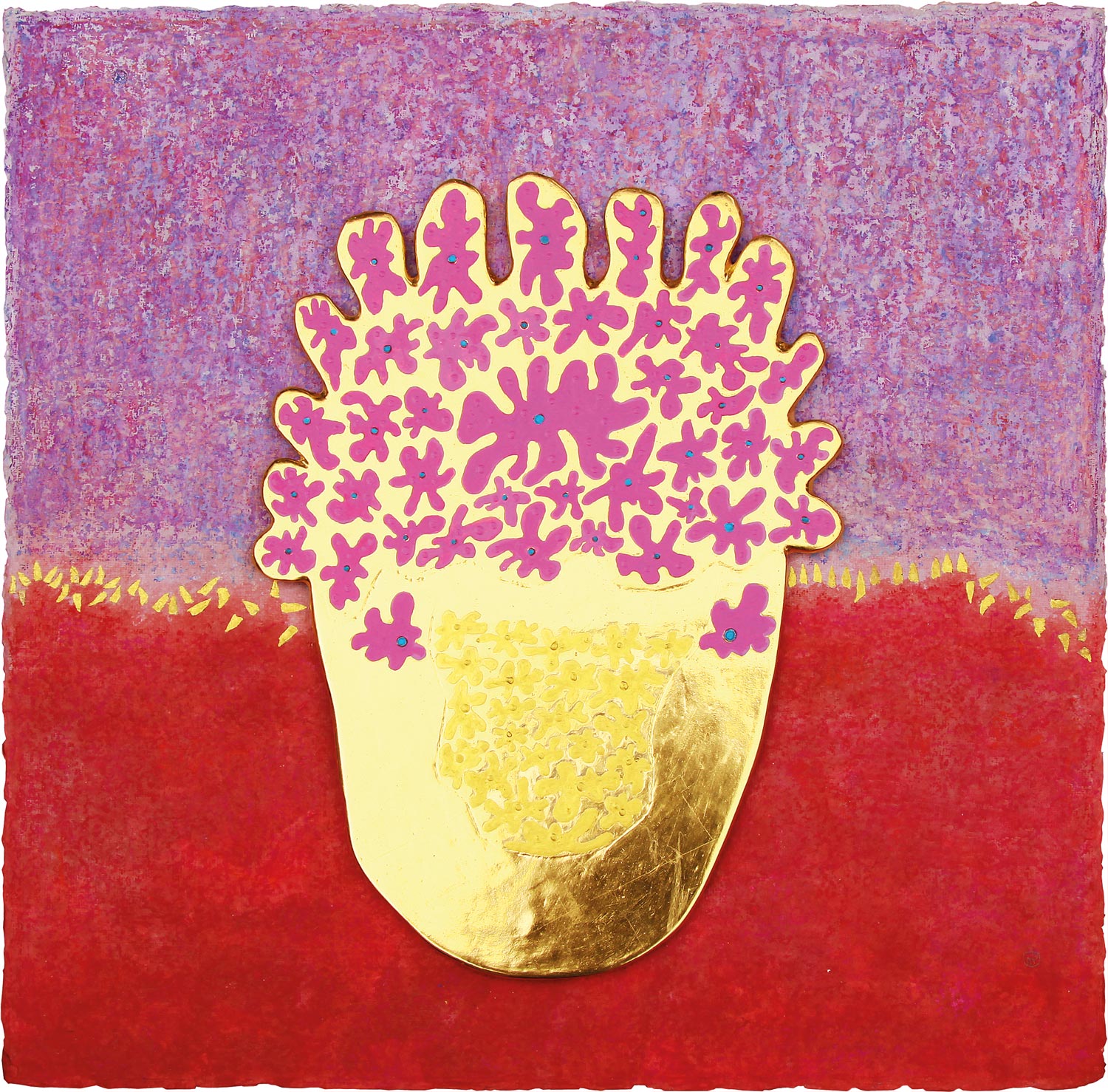
77 x 77 cm, halbplastisches Holzobjekt 24 Karat Hand vergoldet. Pigmente, Ölkreide, Aquarell auf handgeschöpftem Bütten, Museumsglas 2016.
In memoriam eines Malers.
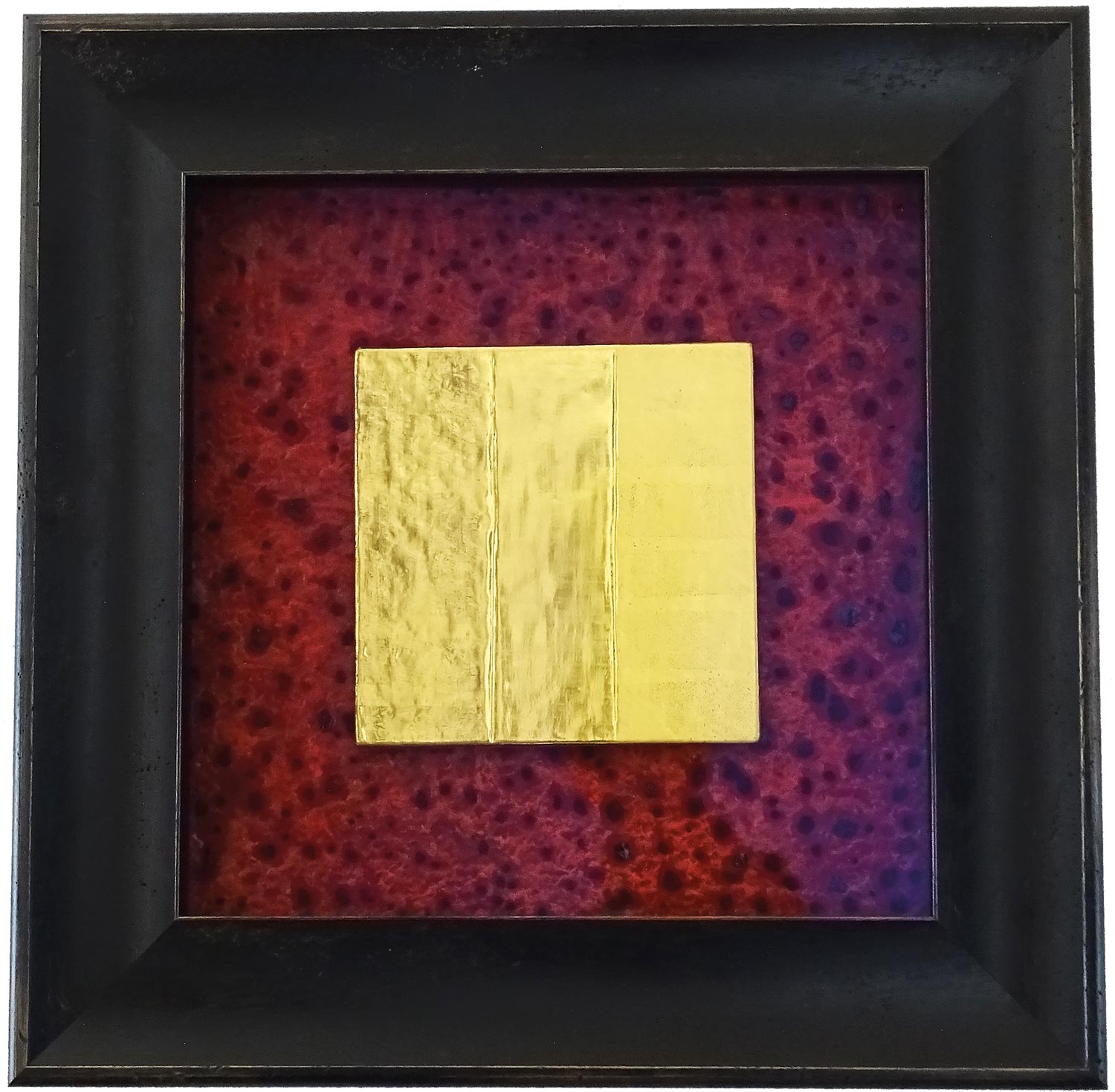
53 x 53 cm, 24 Karat Hand vergoldetes, halb plastisches Holzobjekt, Pigment Malerei auf handgeschöpftem Bütten Karton, Museumsglas 2015.
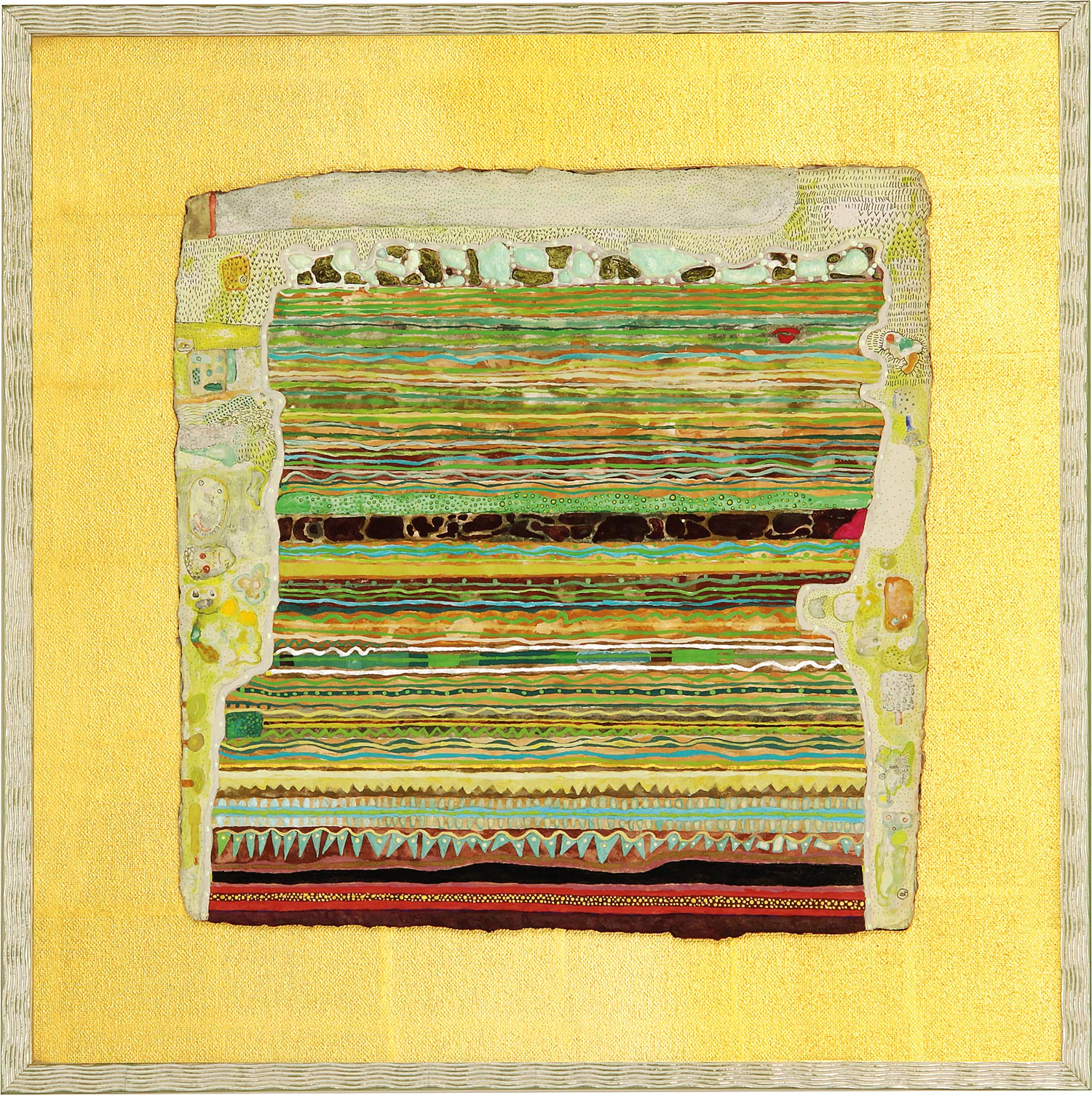
46 x 46 cm, Pigment Malerei auf handgeschöpftem Büttenpapier auf 24 Karat Hand vergoldetem Leinen, Museumsglas 2016.
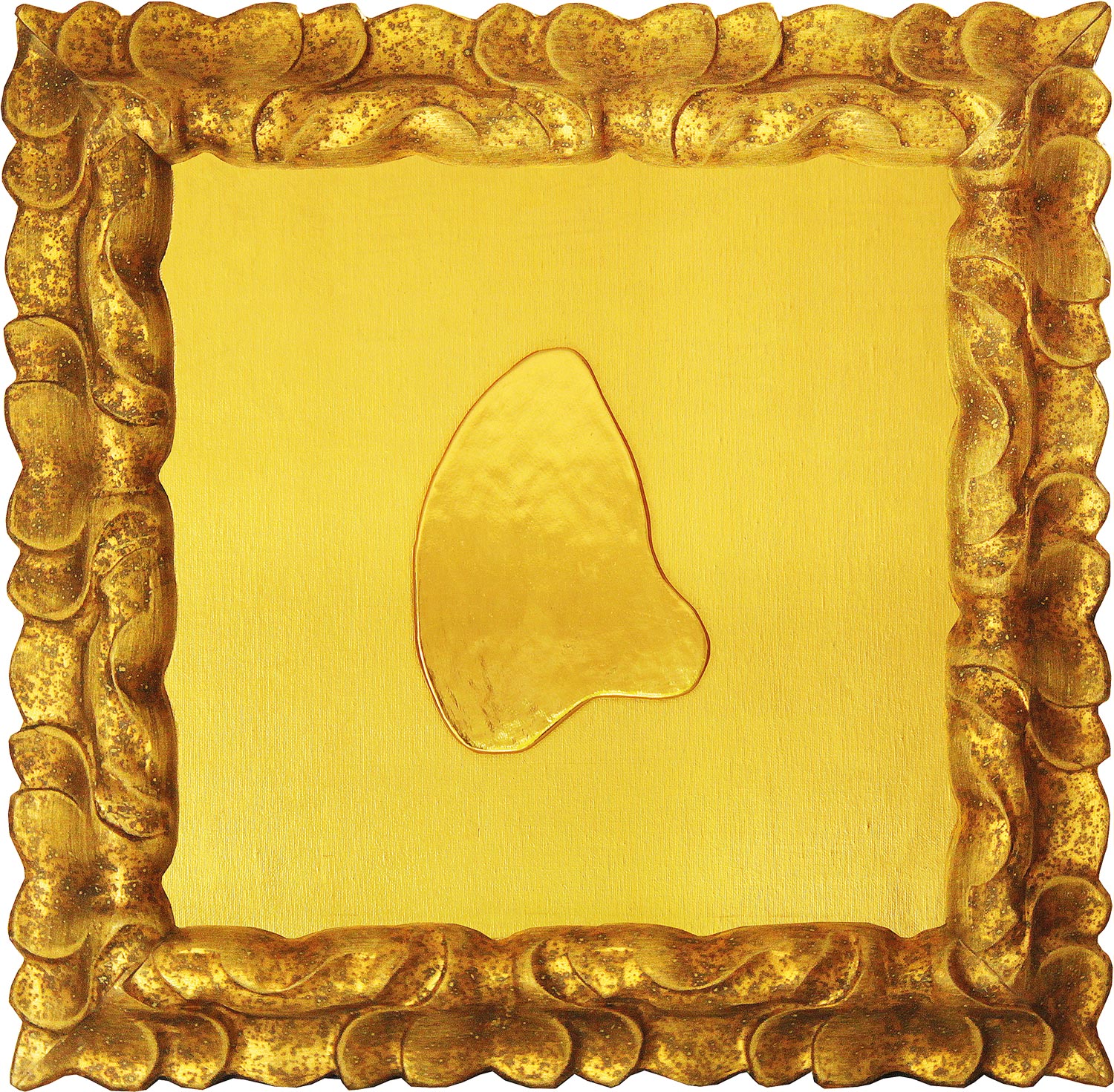
53 x 53 cm, 24 Karat vergoldetes, halb plastisches Holzobjekt auf 24 Karat vergoldeter Leinwand, Museumsglas 2015.
Nase eines erstaunlichen Kunstfälschers.
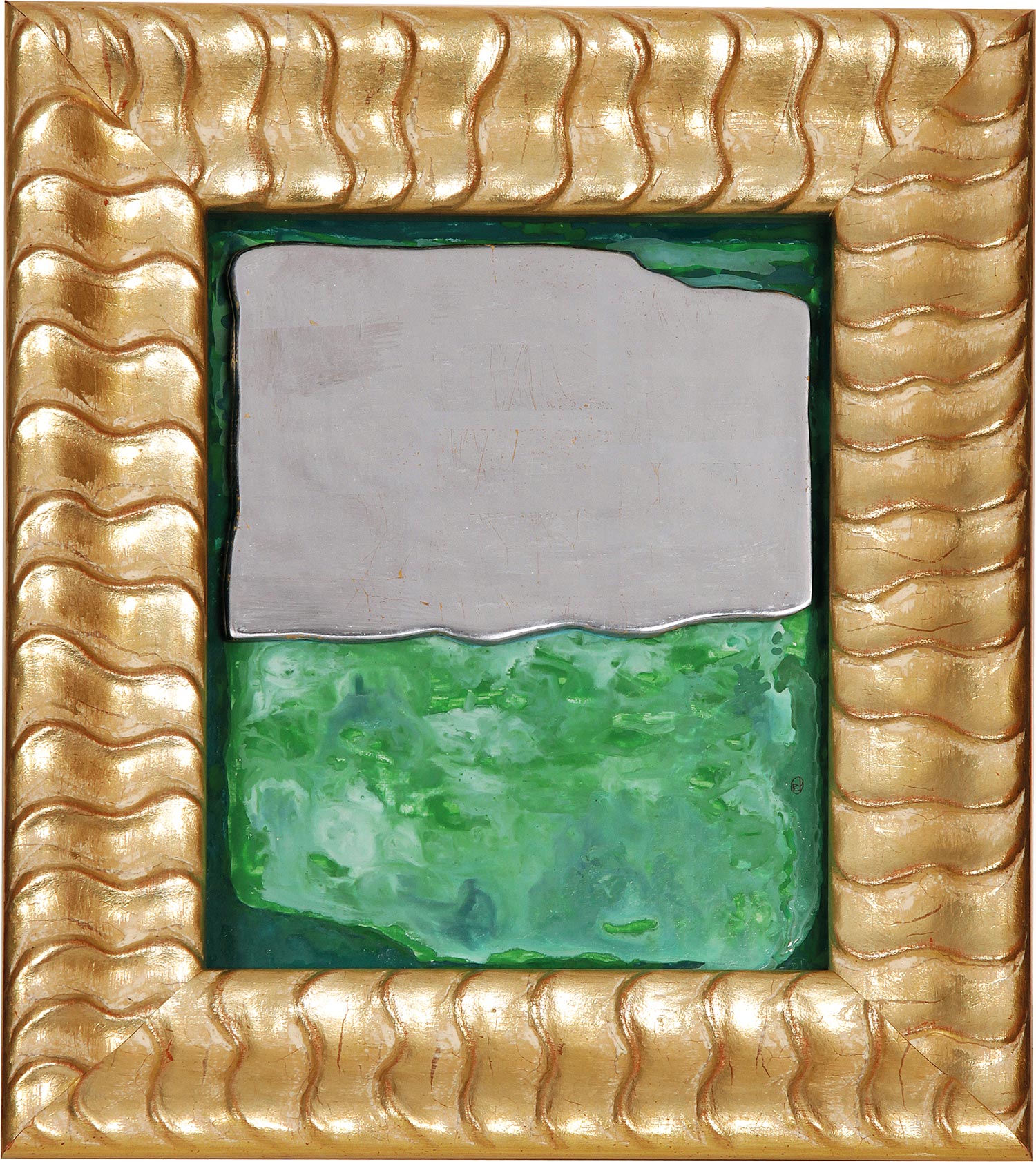
Echtes Palladium auf Holzobjekt 42 x 37 cm auf Leinen, Pigmente, Museumsglas 2016.
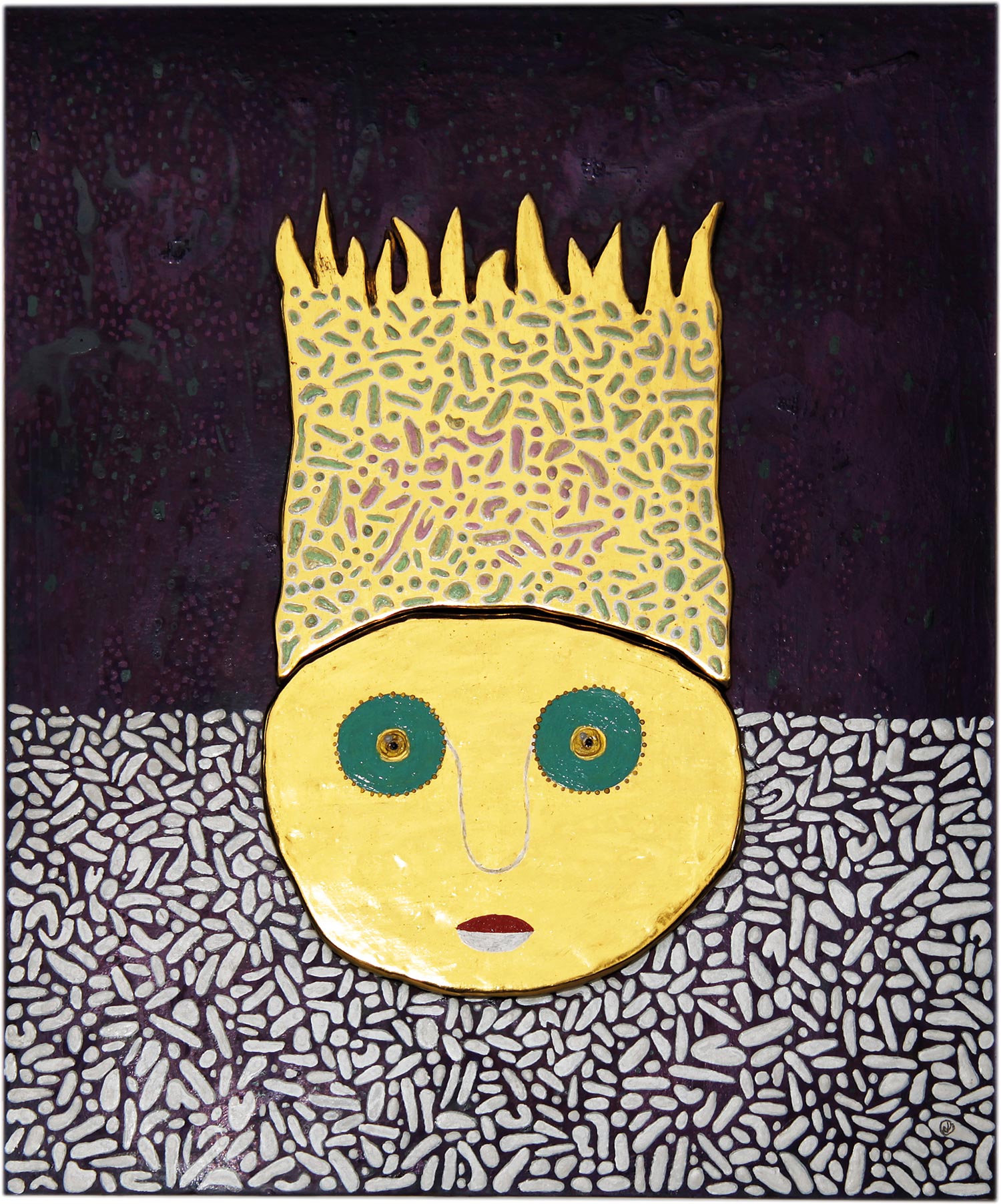
66 x 58 cm, 24 Karat zweigeteiltes Hand vergoldetes, halb plastisches Holzobjekt, Pigment Malerei auf Bütten Karton, Museumsglas 2014.
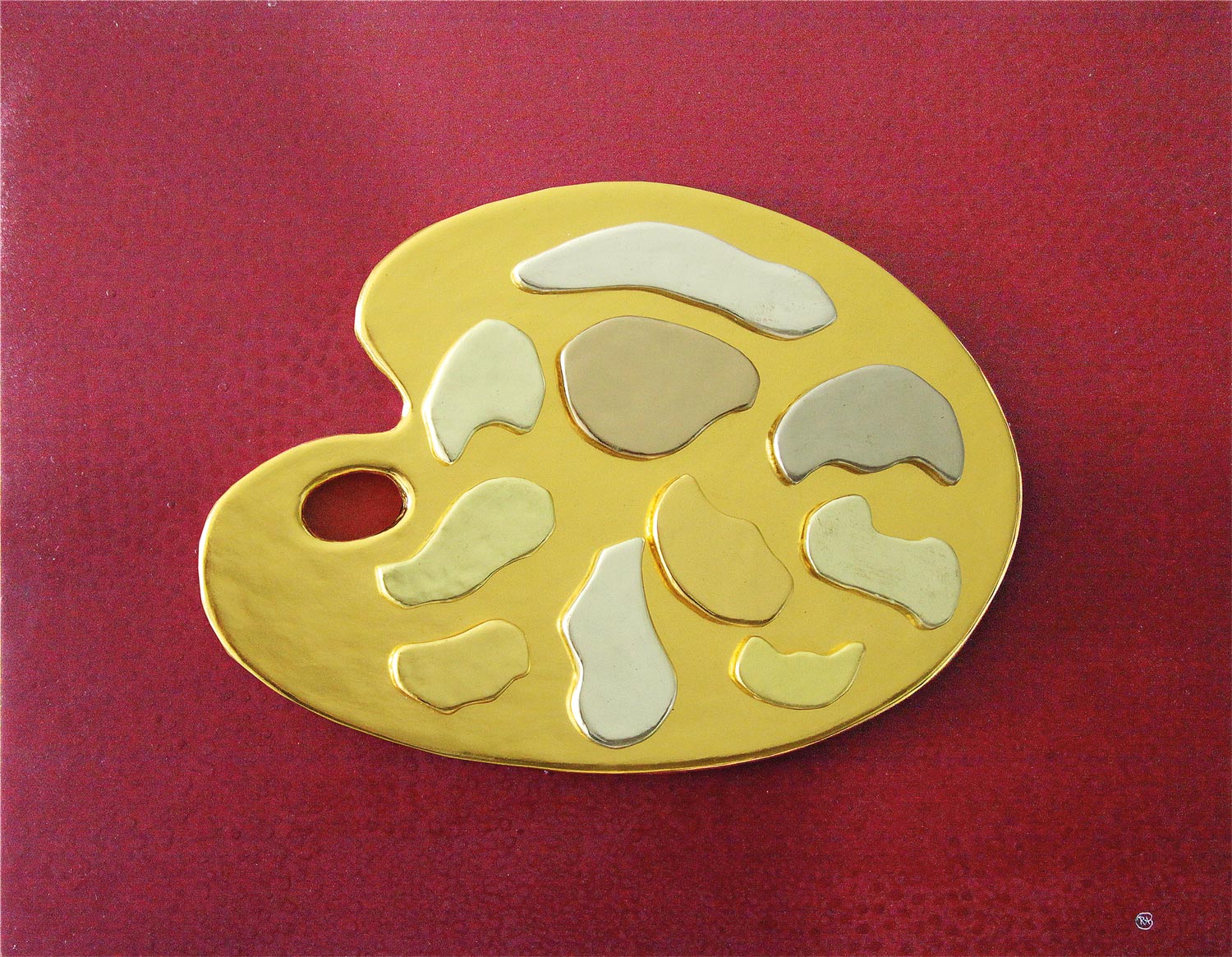
59 x 67 cm, 9 verschiedene Goldsorten auf vergoldetem, halb plastischem Holzobjekt, 24 Karat, auf handgeschöpftem Bütten Karton, Museumsglas 2015. Handwerkliche Ausführung Ludwig Dunkel.
An Stelle von Restfarbe auf der Palette, 9 verschiedene Goldsorten.
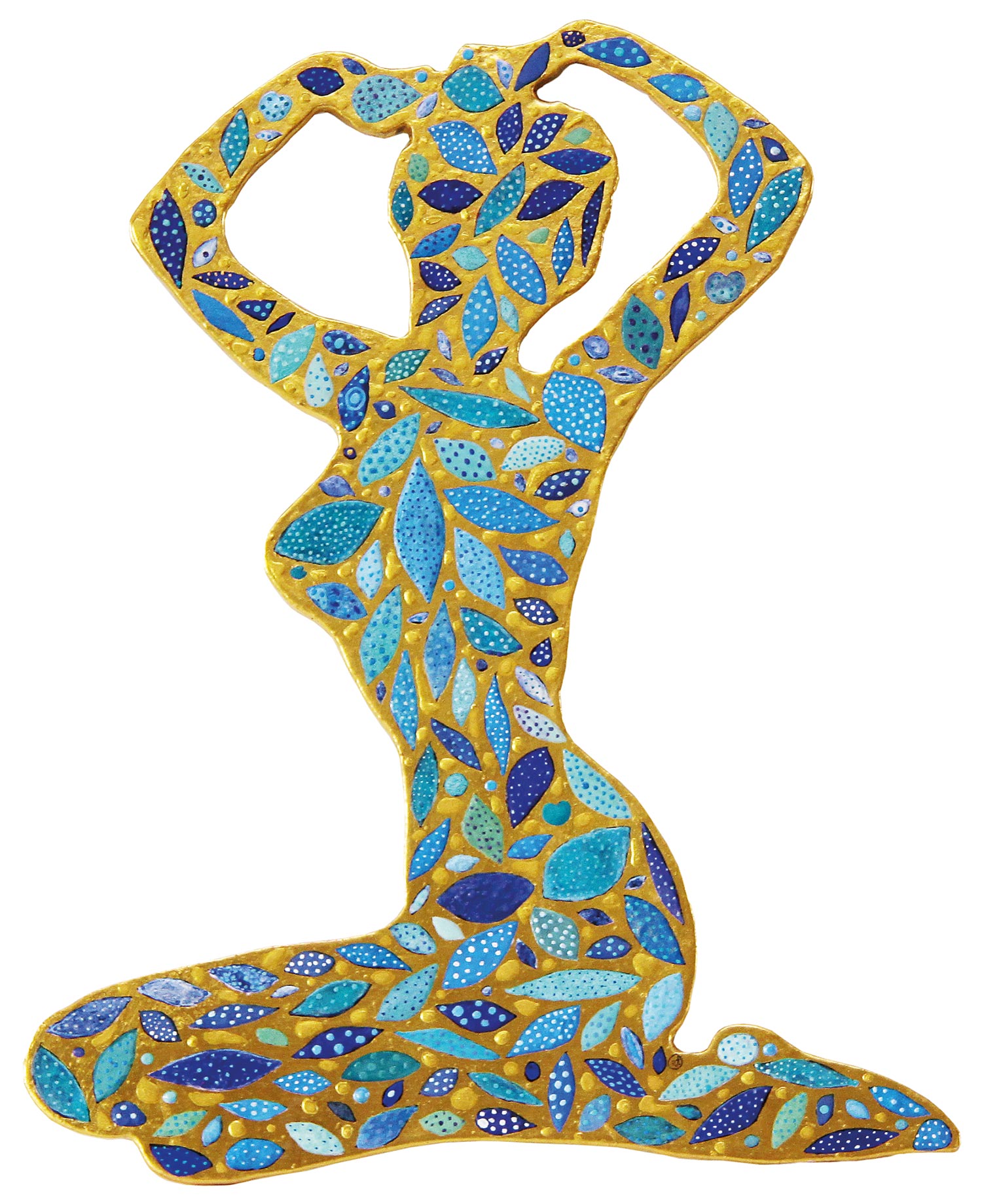
55 x 46 cm, gelaserte Hand vergoldete, halb plastische Stahlfigur, mehrschichtige Pigment Malerei auf Metall 2008/16
(Deutungshinweis) the pause that refreshes. Alter Coca Cola Werbespruch.
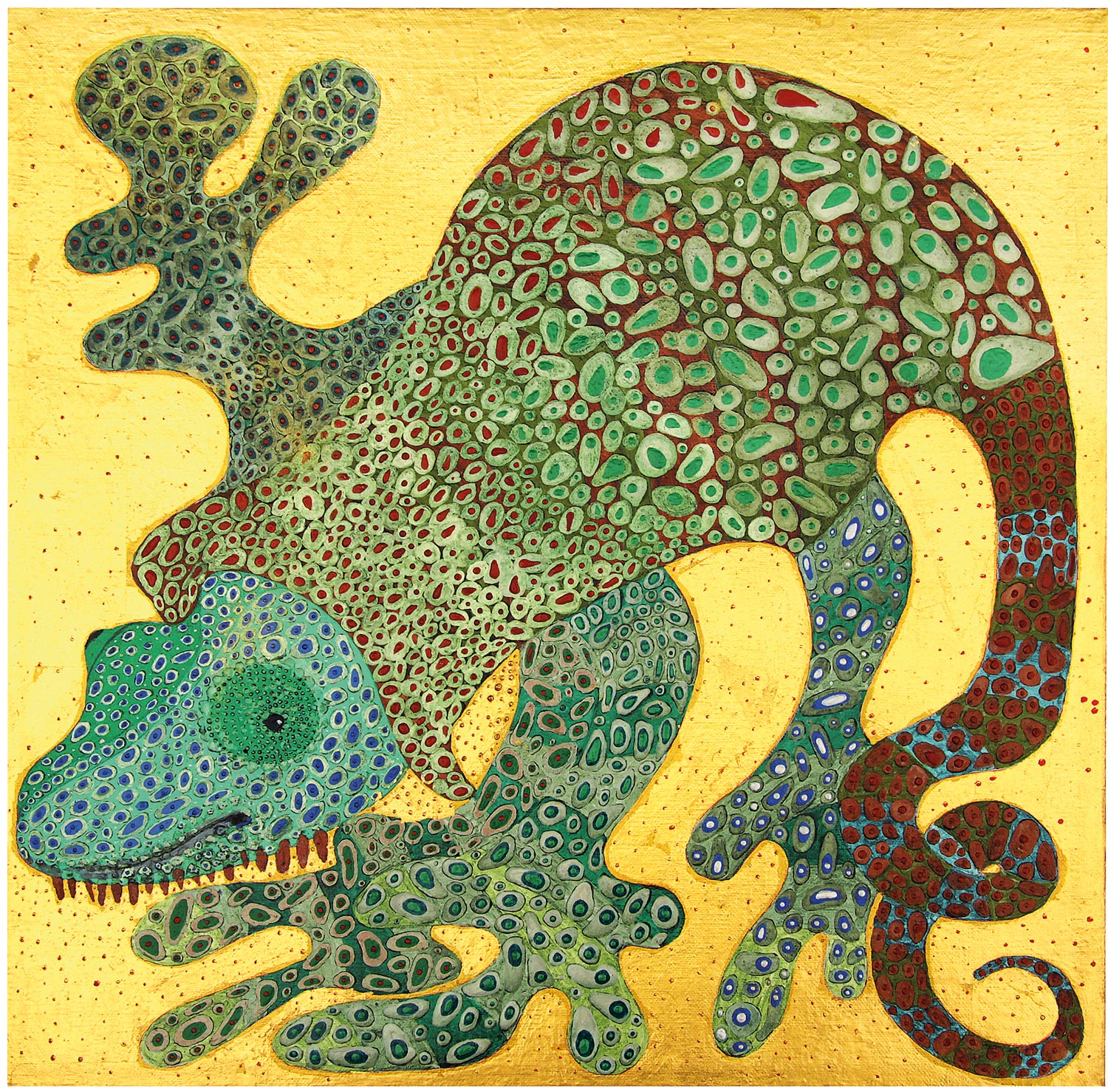
43 x 43 x 4 cm, Pigment Malerei auf Goldgrund 24 Karat, auf Leinwand 2010/16
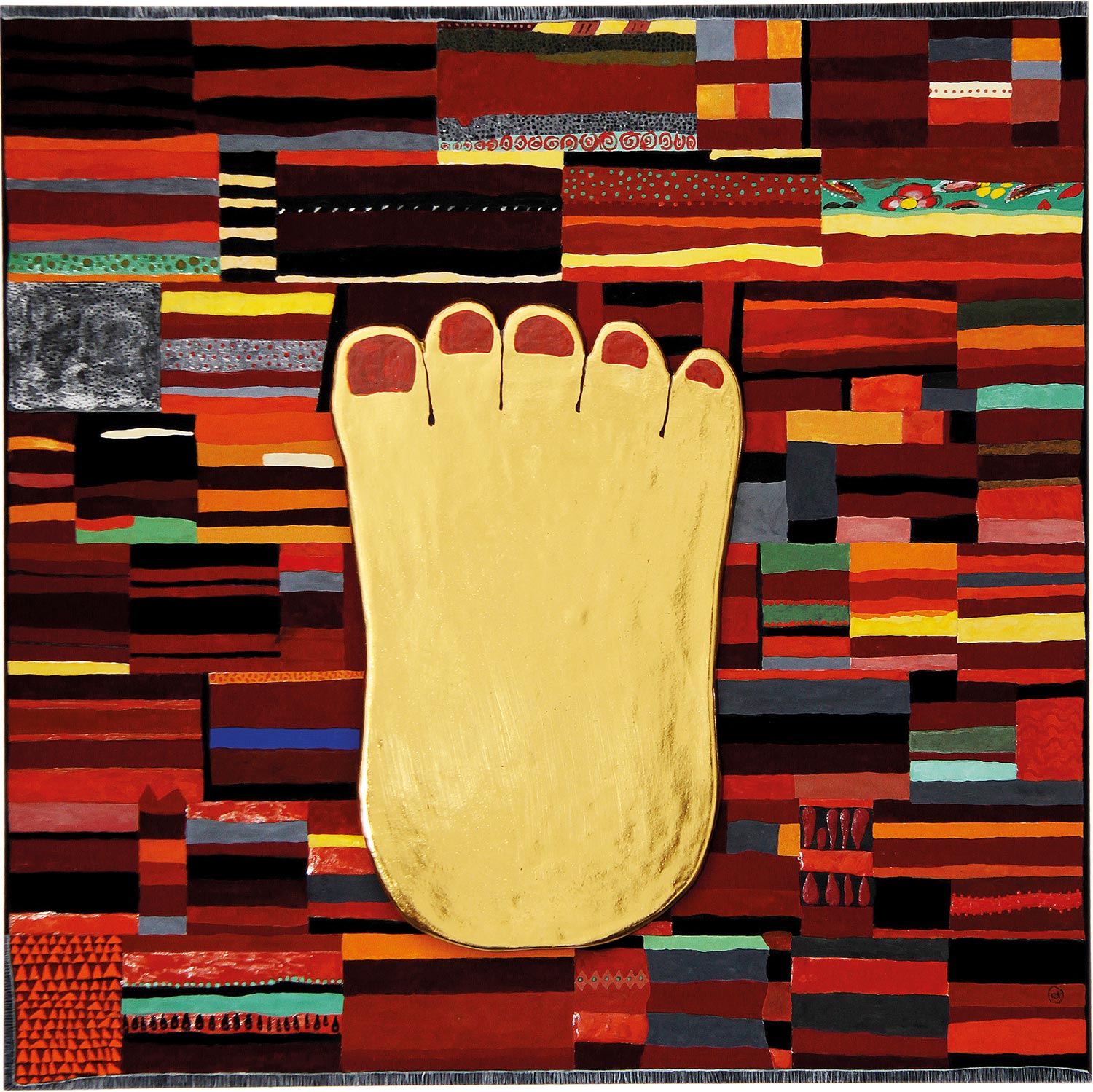
24 Karat Hand vergoldetes, halb plastisches Holzobjekt, Pigment Malerei auf Karton 68 x 76 cm, 2014/15 Museumsglas
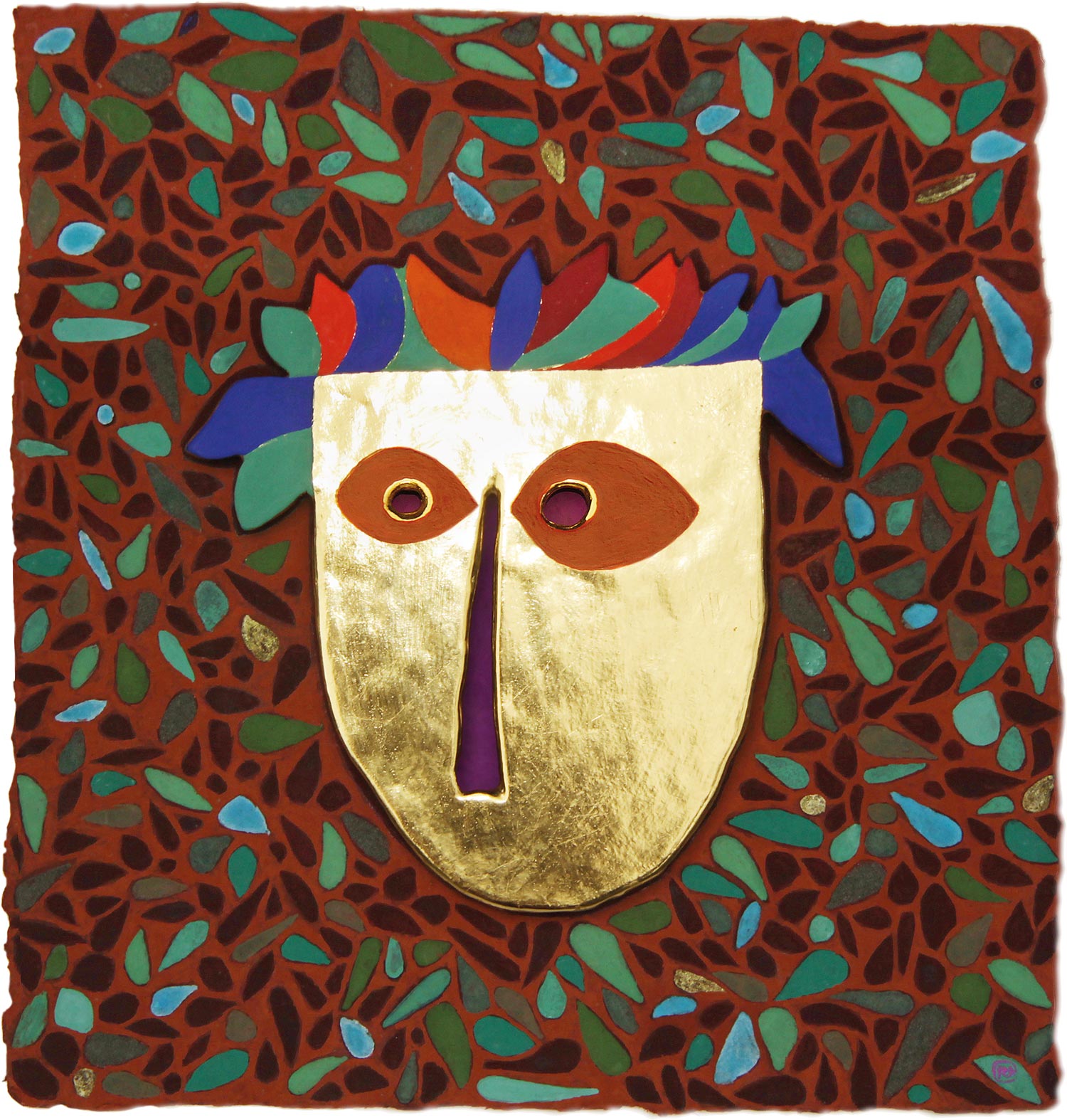
52 x 52 cm halb plastisches Holzobjekt, Hand vergoldet 24 Karat, Objekt bemalt, auf handgeschöpftem Bütten Karton, Museumsglas 2015
Buschmaske nach Ngere Liberien.
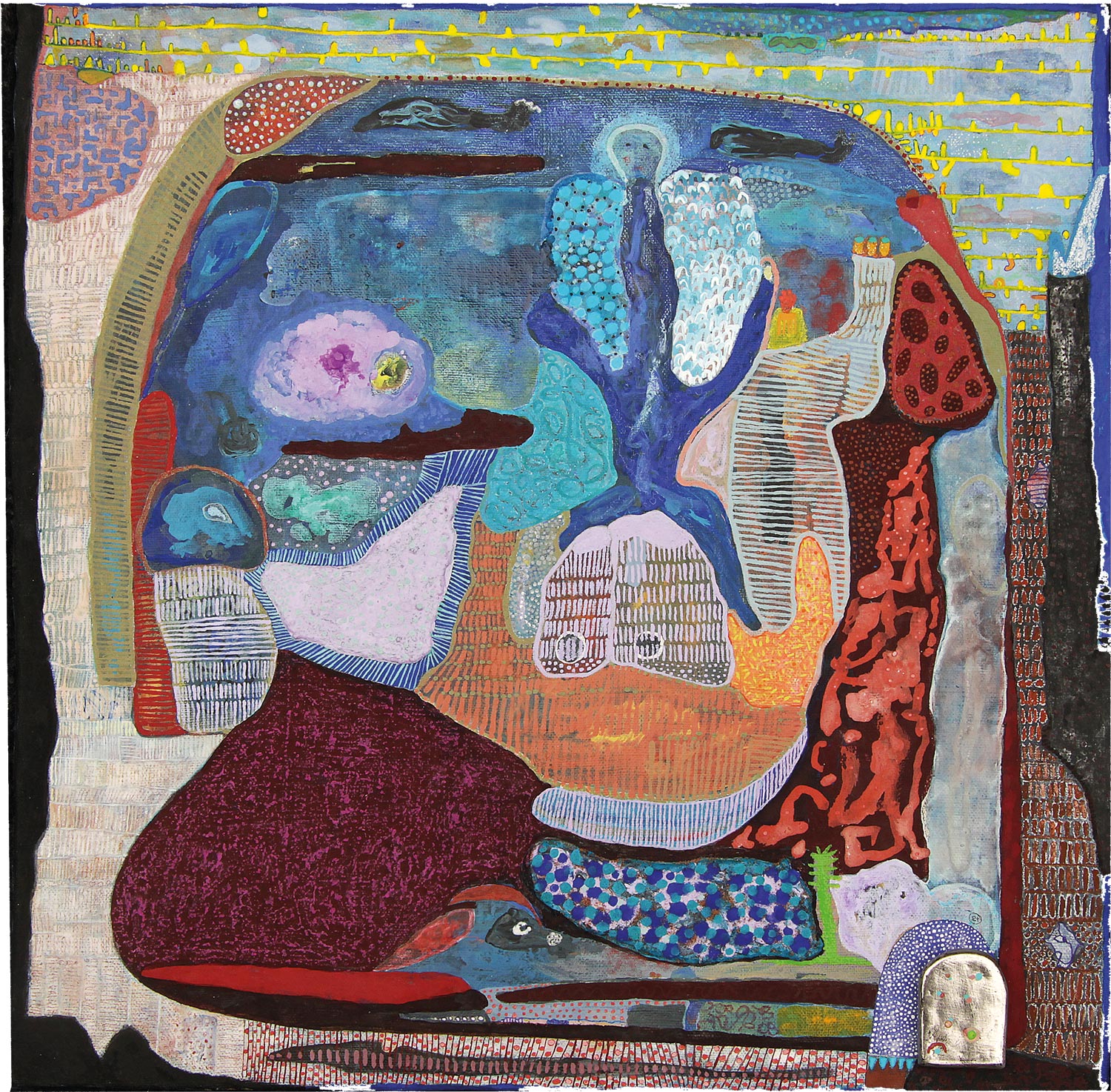
60 x 60 cm, Pigmente, Aquarell, Kreide, echtes Palladium auf handgeschöpftem Bütten, Museumsglas 2016 – unverkäuflich
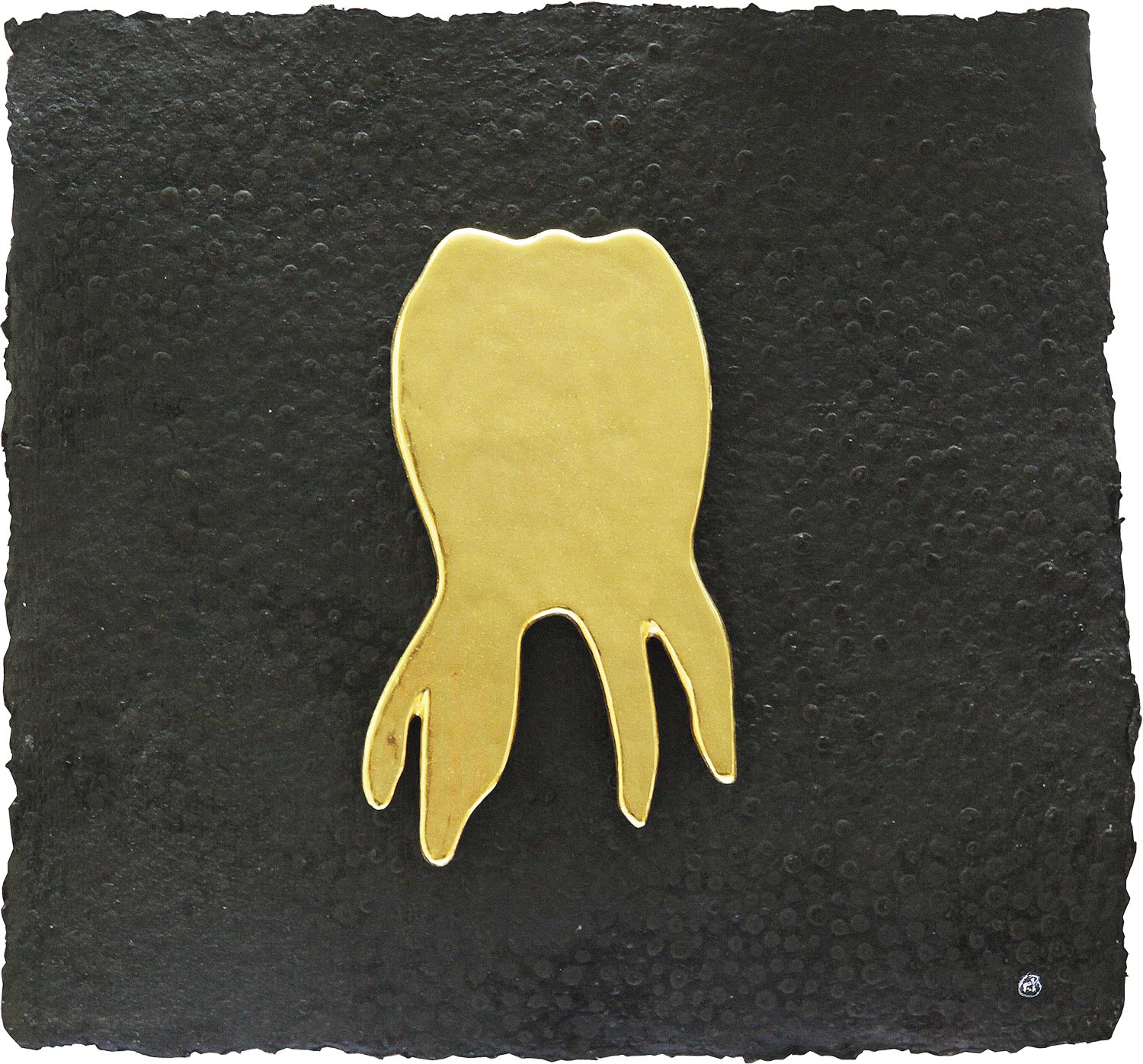
53 x 54 cm, vergoldetes, halb plastisches Holzobjekt 24 Karat, auf handgeschöpftem Bütten Karton, Museumsglas 2014
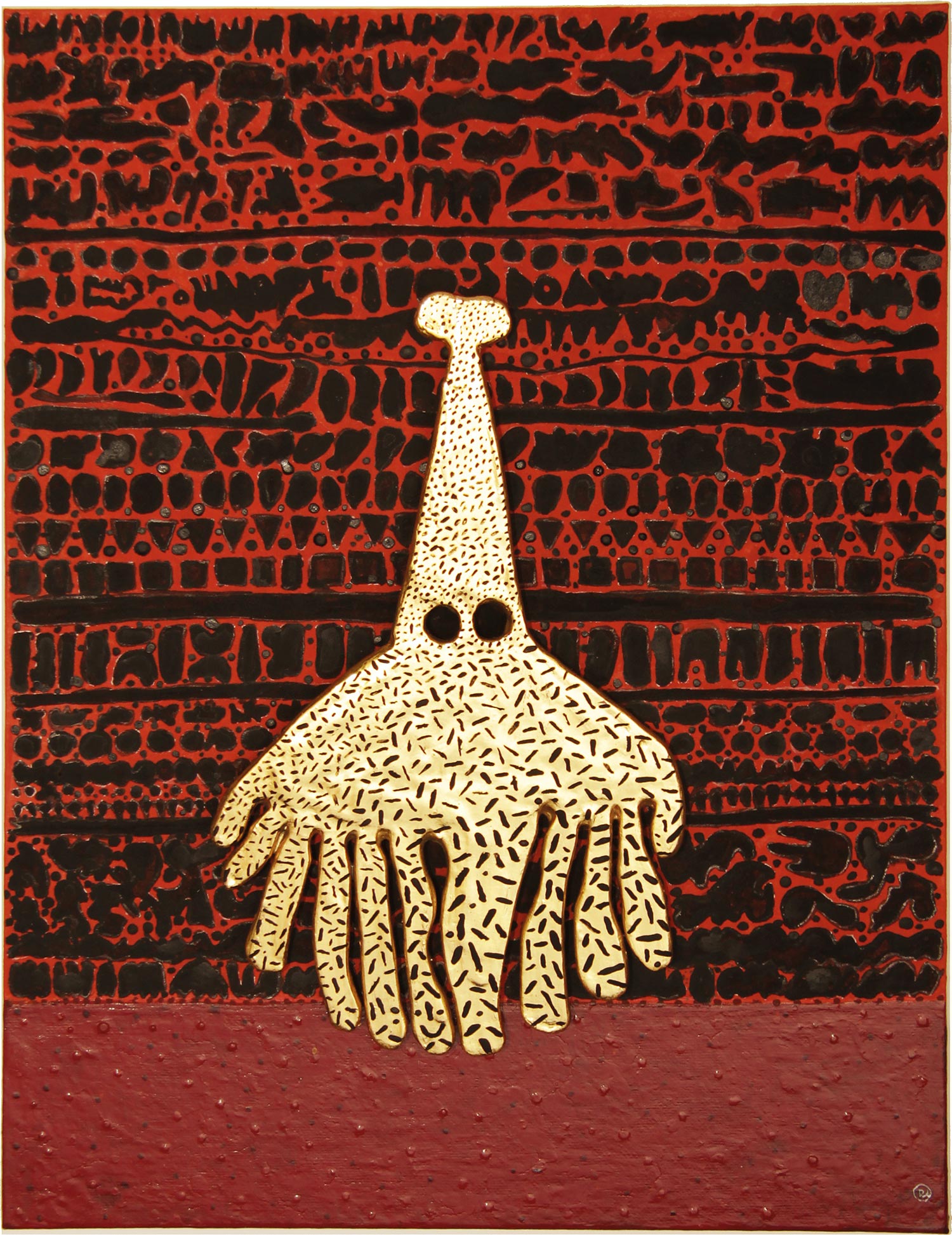
61 x 52 cm, Hand vergoldetes und bemaltes halb plastisches Holzobjekt, 24 Karat, auf Karton, Museumsglas 2014
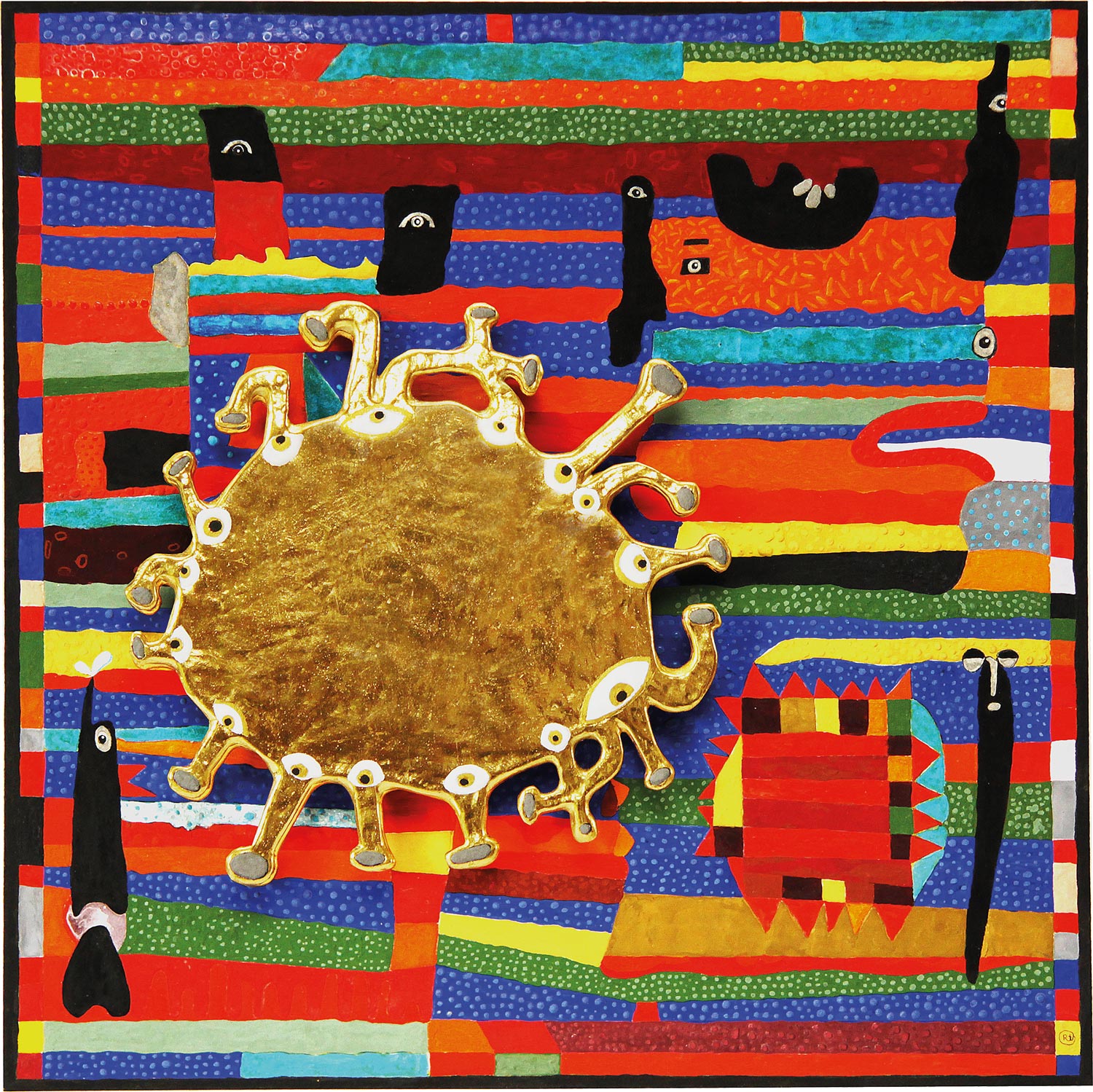
61 x 61 cm, Hand vergoldetes, halb plastisches Holzobjekt, 24 Karat, auf handgeschöpftem Bütten Karton, Museumsglas 2015
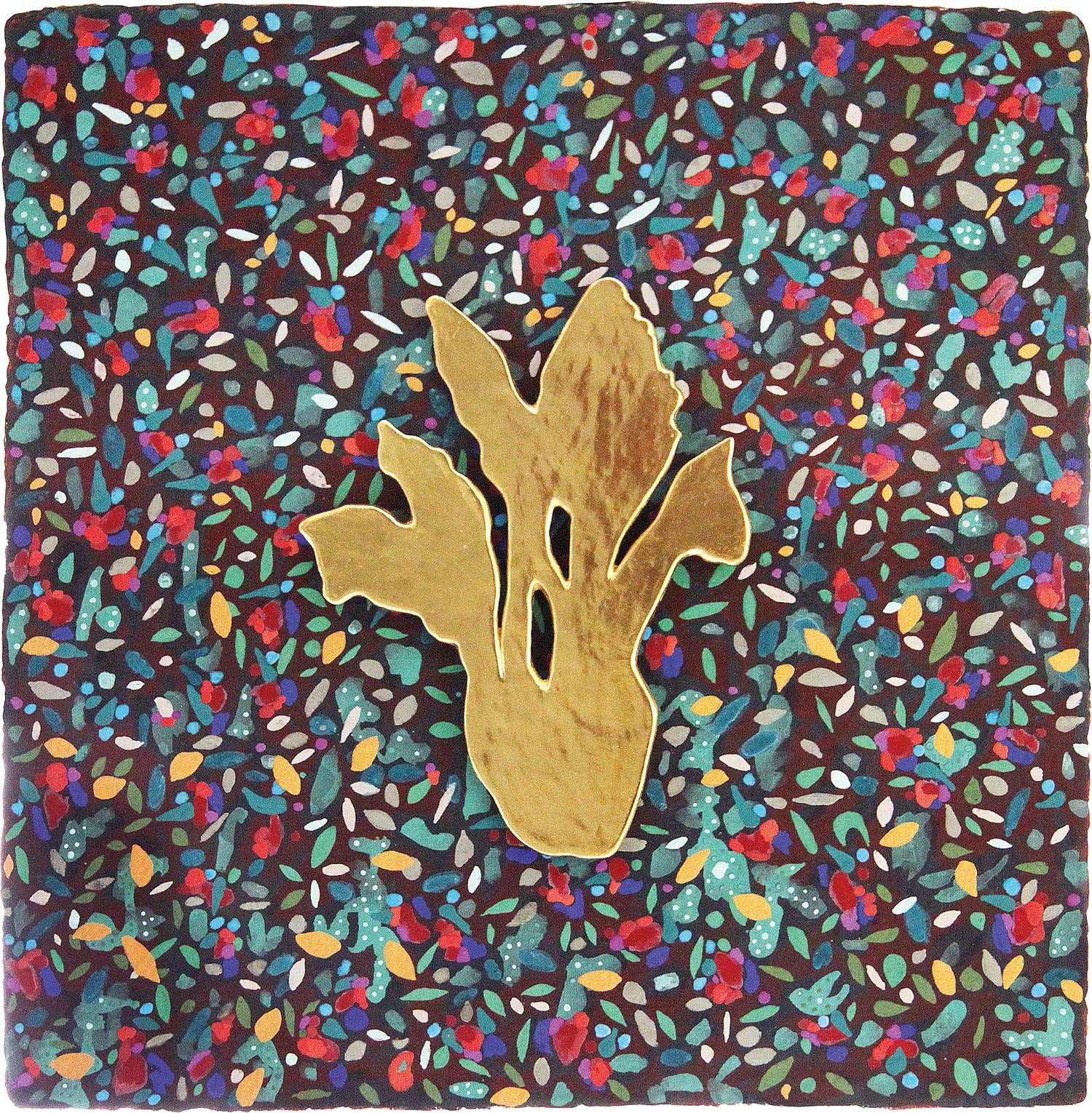
73 x 73 cm, Hand vergoldetes, halb plastisches Holzobjekt, 24 Karat, Pigment Malerei, auf handgeschöpftem Bütten Karton, Museumsglas 2015
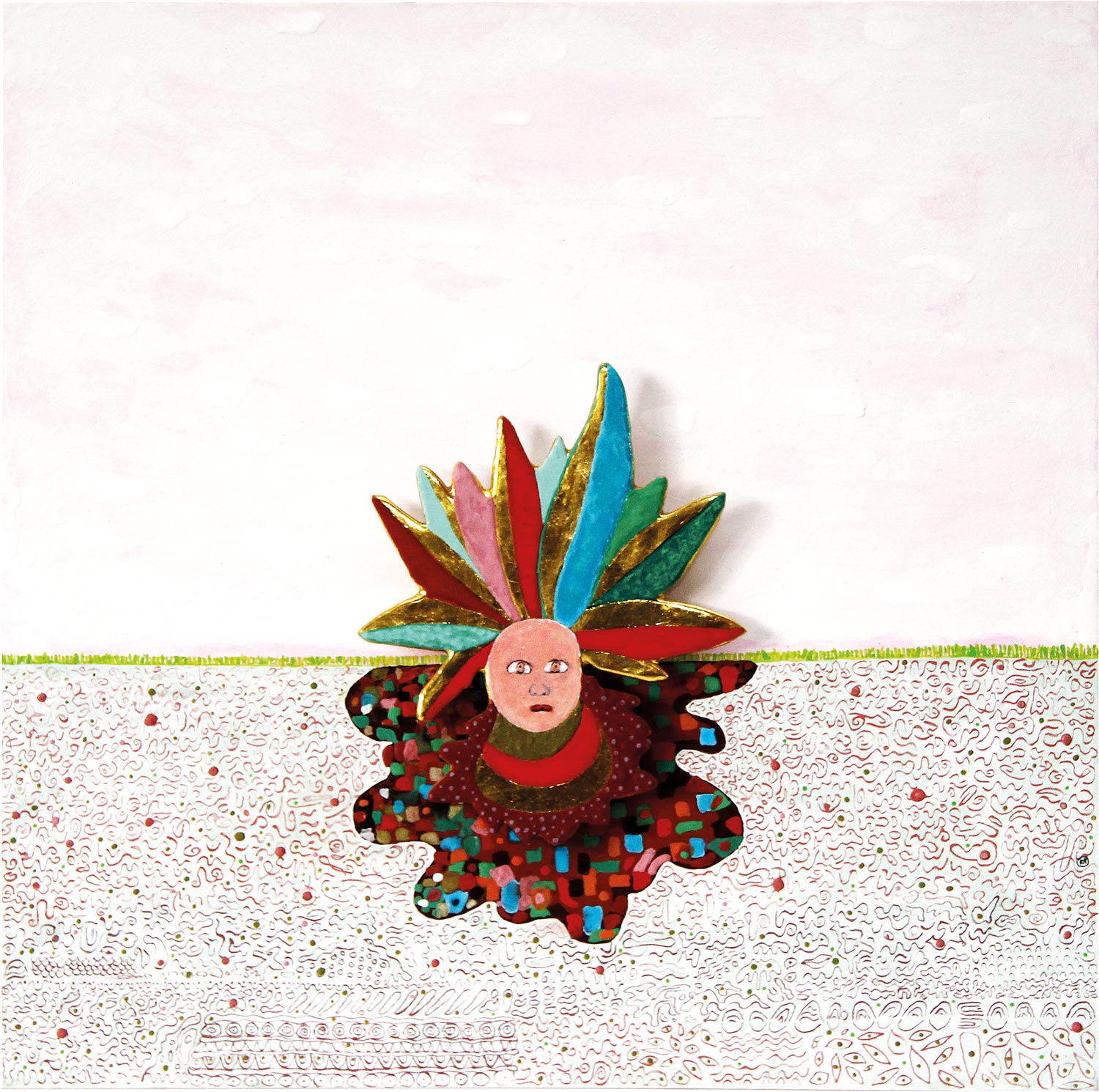
38 x 38 cm, 24 Karat Hand vergoldetes halb plastisches, bemaltes Holzobjekt auf Karton, Museumsglas 2015

53 x 53 cm, Hand vergoldeter Holzstern, 24 Karat, auf handgeschöpftem Bütten Karton, Museumsglas 2014/15
Heimat des kleinen Prinzen.
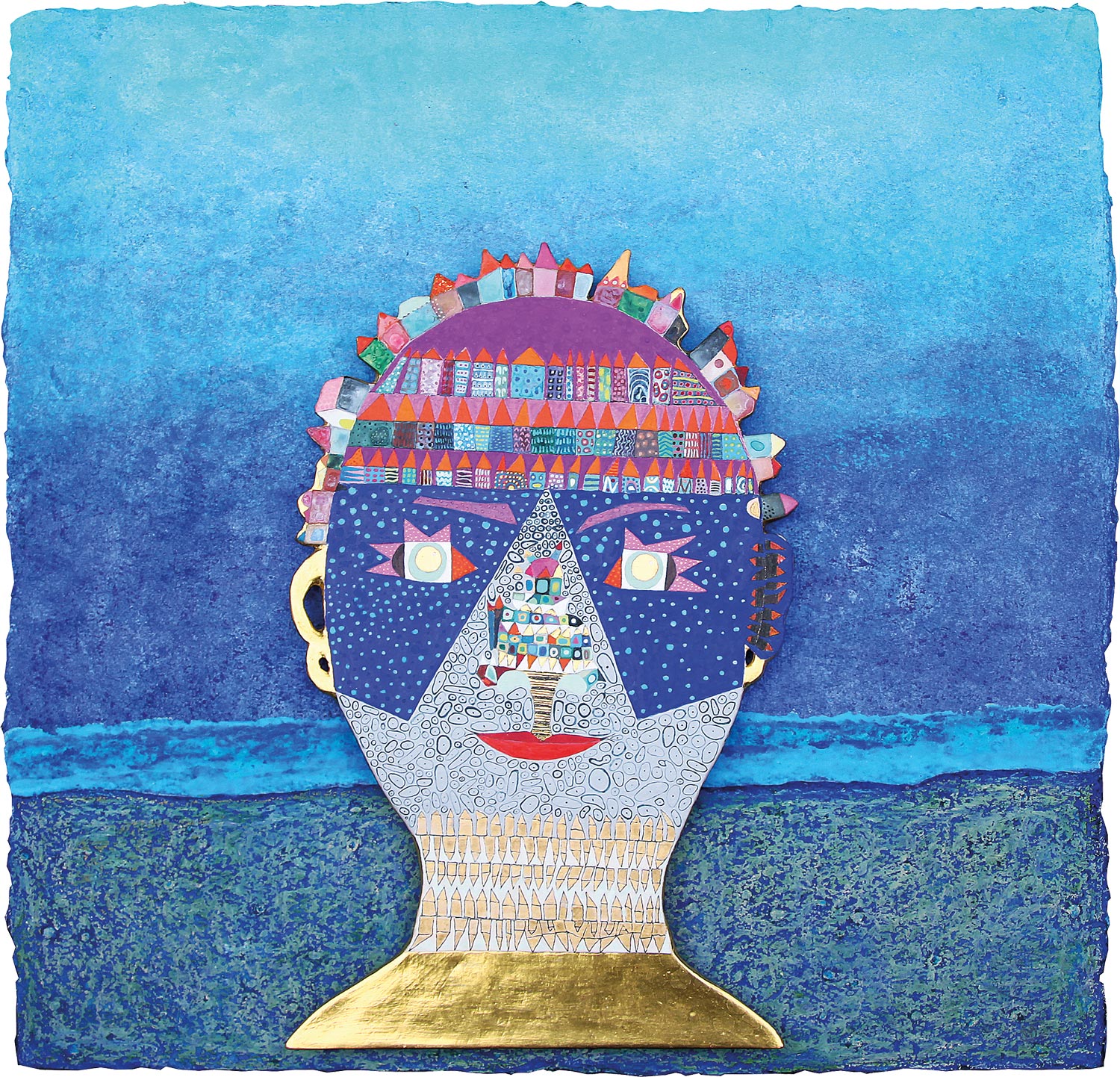
78 x 78 cm, halbplastisches Holzobjekt 24 Karat, Hand vergoldet, Pigmente und Ölkreide auf handgeschöpftem Bütten, Museumsglas 2016
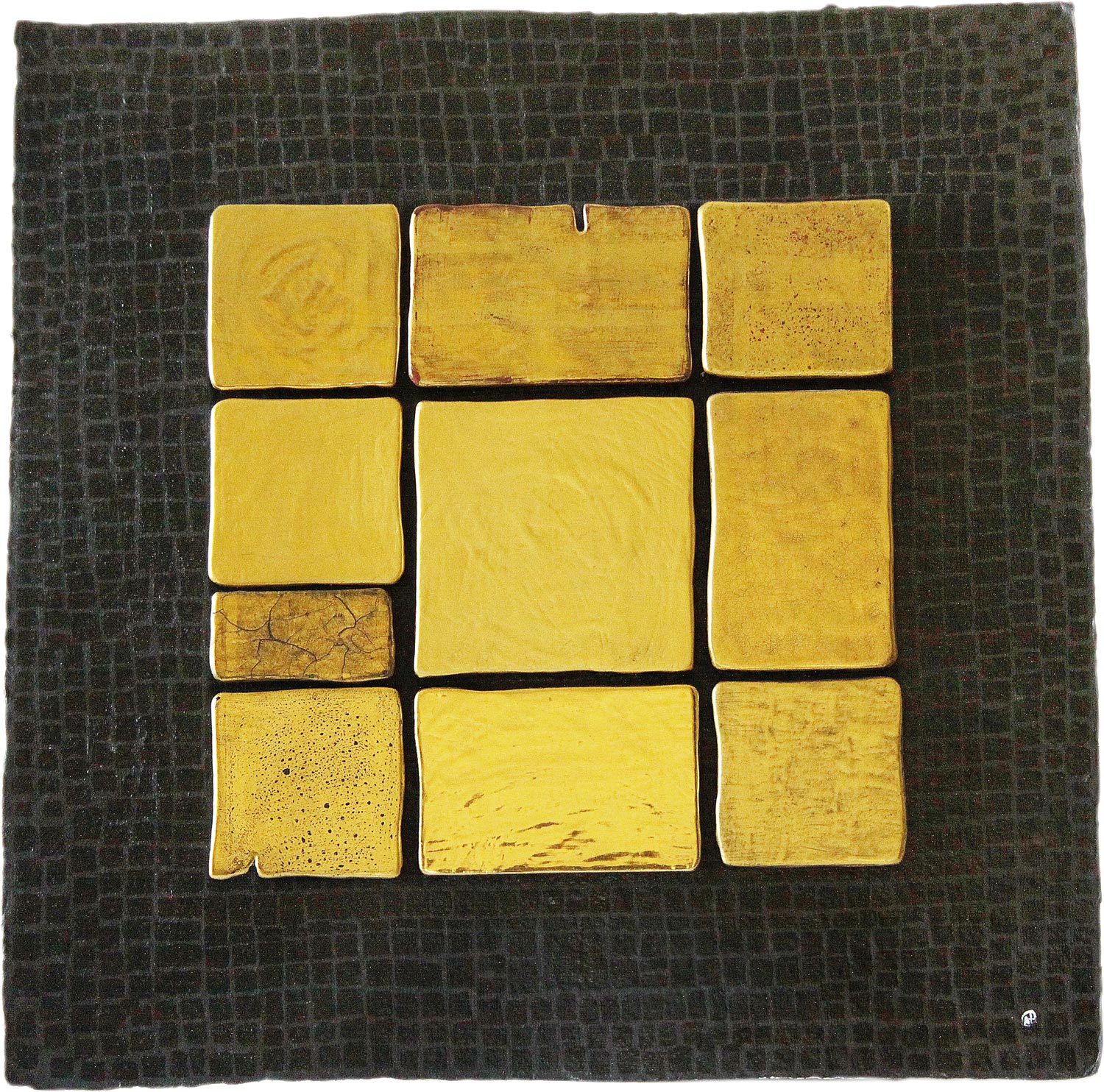
77 x 77 cm, 24 Karat Hand vergoldetes, zehnteiliges halb plastisches Quadrat. Jedes Teil auf der Fläche verschieden vergoldet, unterschiedlich in der Höhe, auf handgeschöpftem Bütten Karton, handwerkliche Ausführung Ludwig Dunkel, Museumsglas 2015
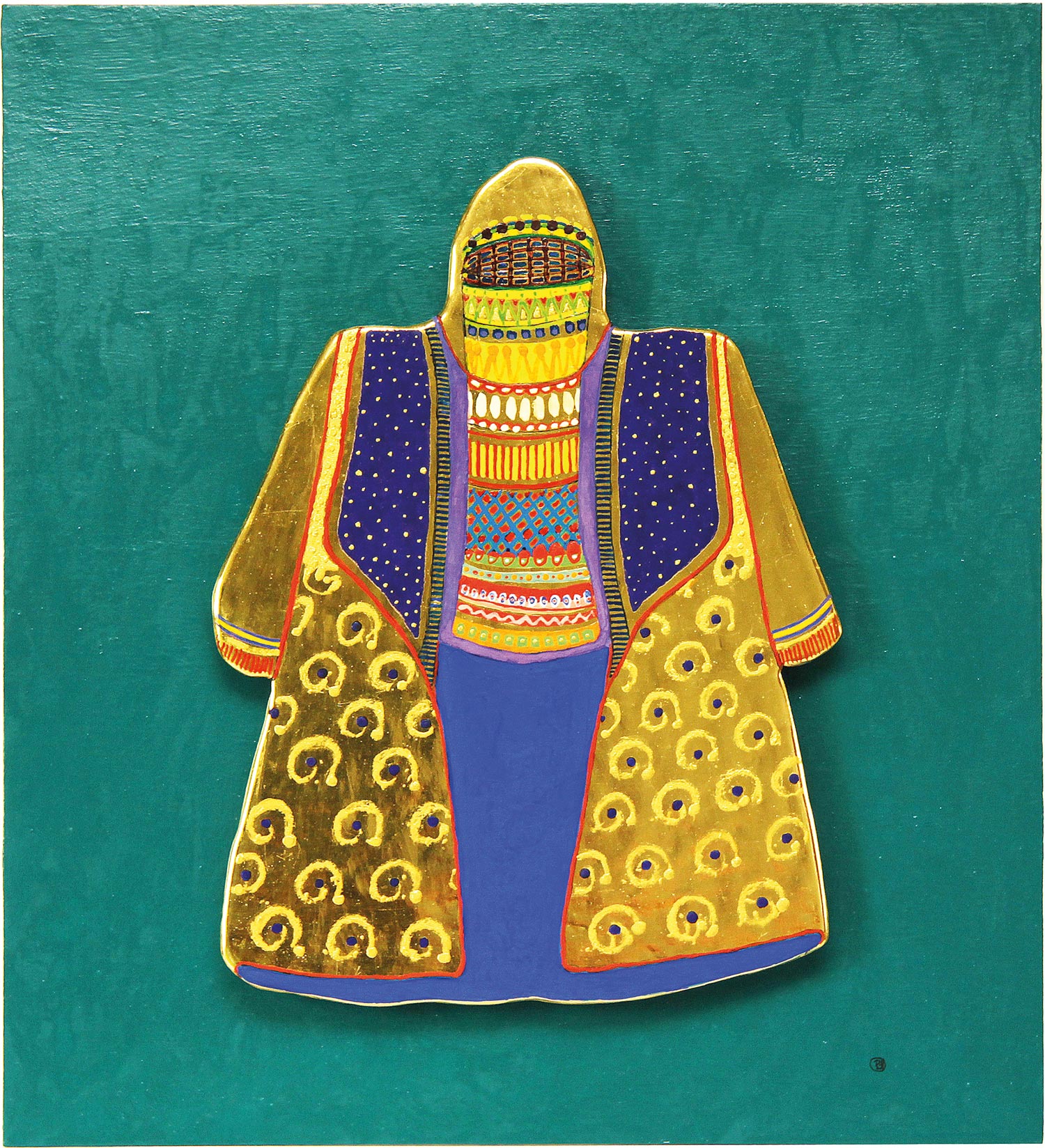
60 x 56 cm, vergoldetes, halb plastisches Holzobjekt 24 Karat, Objekt bemalt auf handgeschöpftem Bütten Karton, Museumsglas 2015
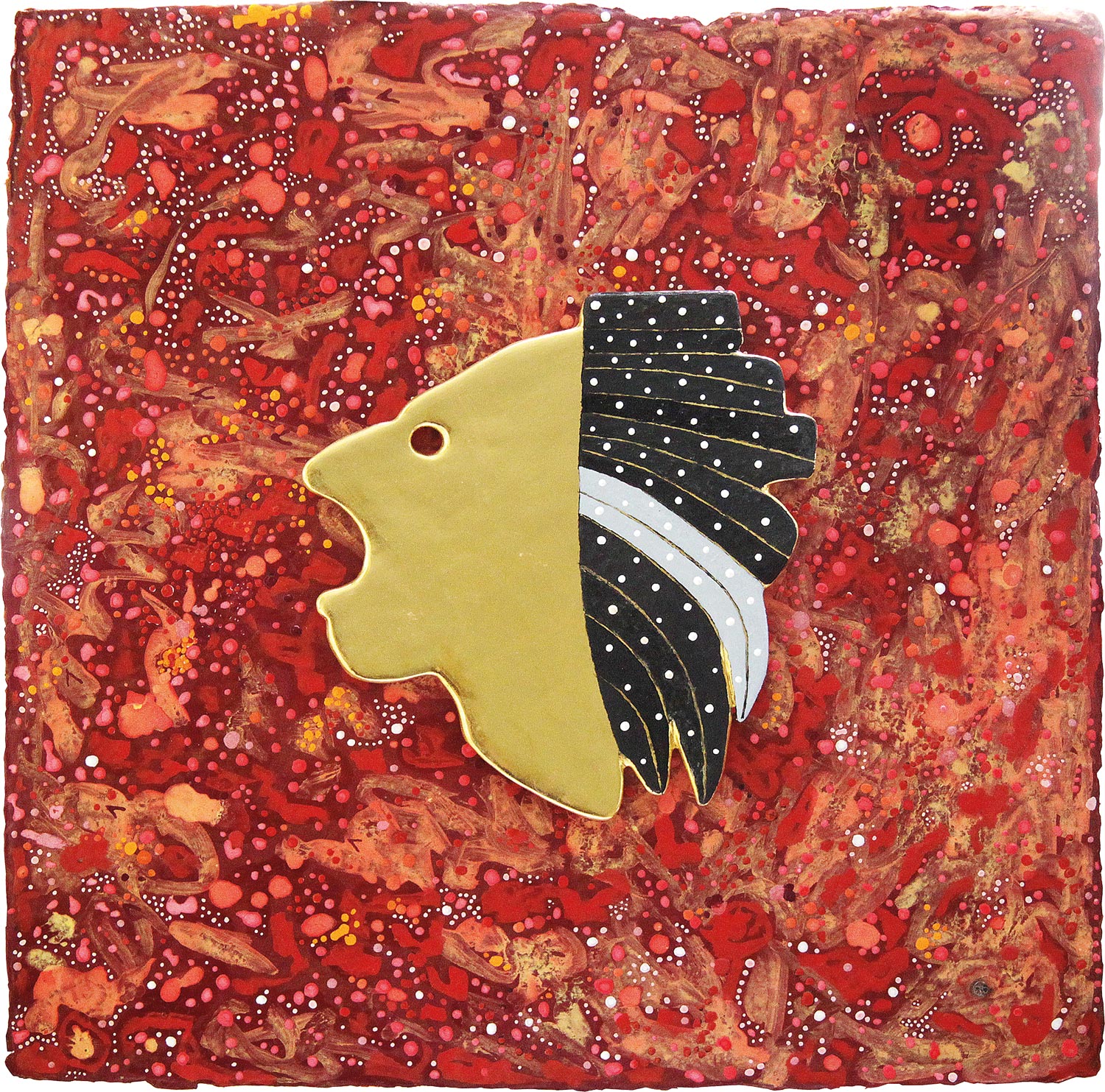
73 x 73 cm, 24 Karat Hand vergoldetes, halb plastisches Holzobjekt, Pigmente auf handgeschöpftem Bütten Karton, Museumsglas 2015
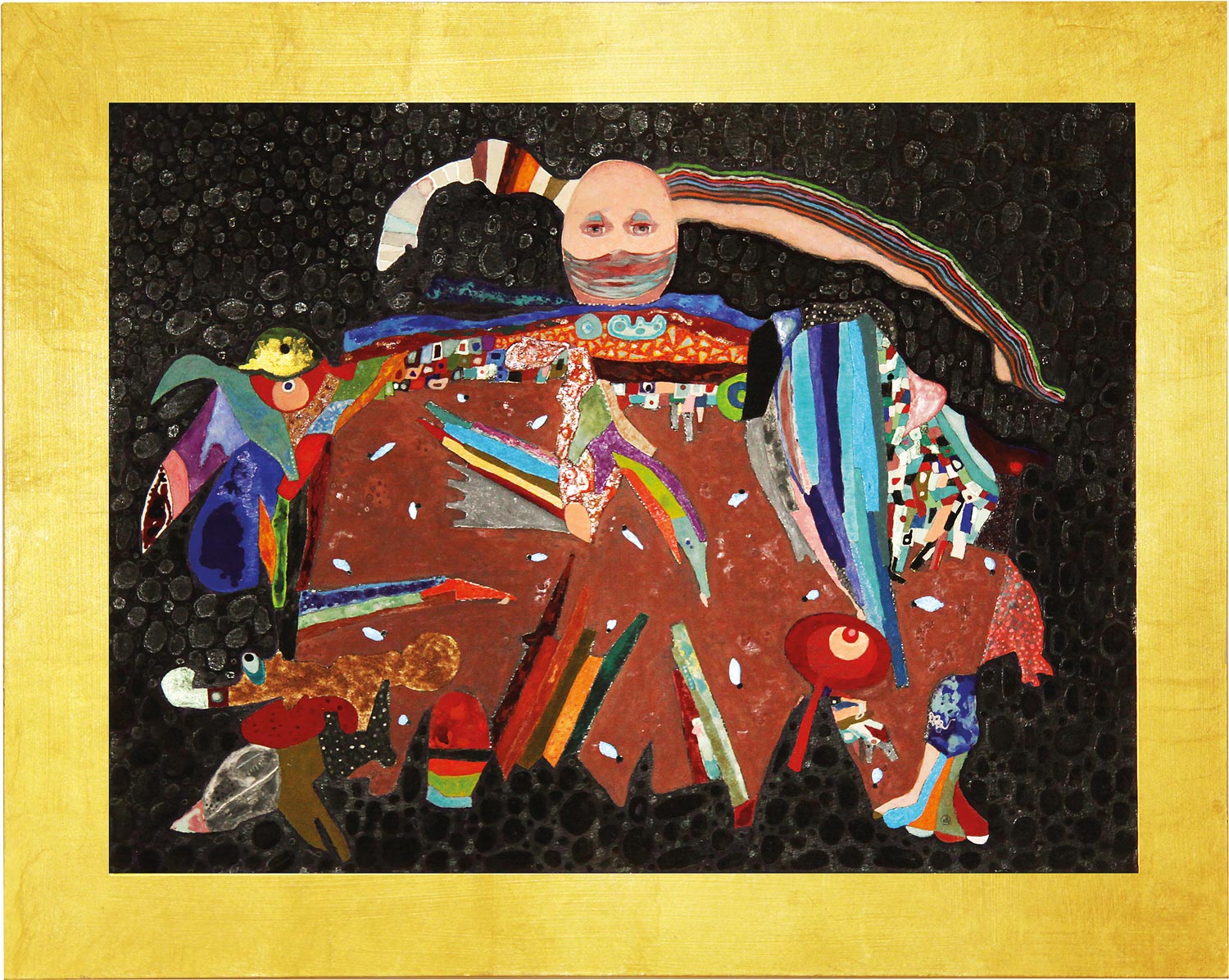
48 x 60 cm, Pigment Malerei auf Karton, auf 24 Karat Goldgrund, Museumsglas 2015
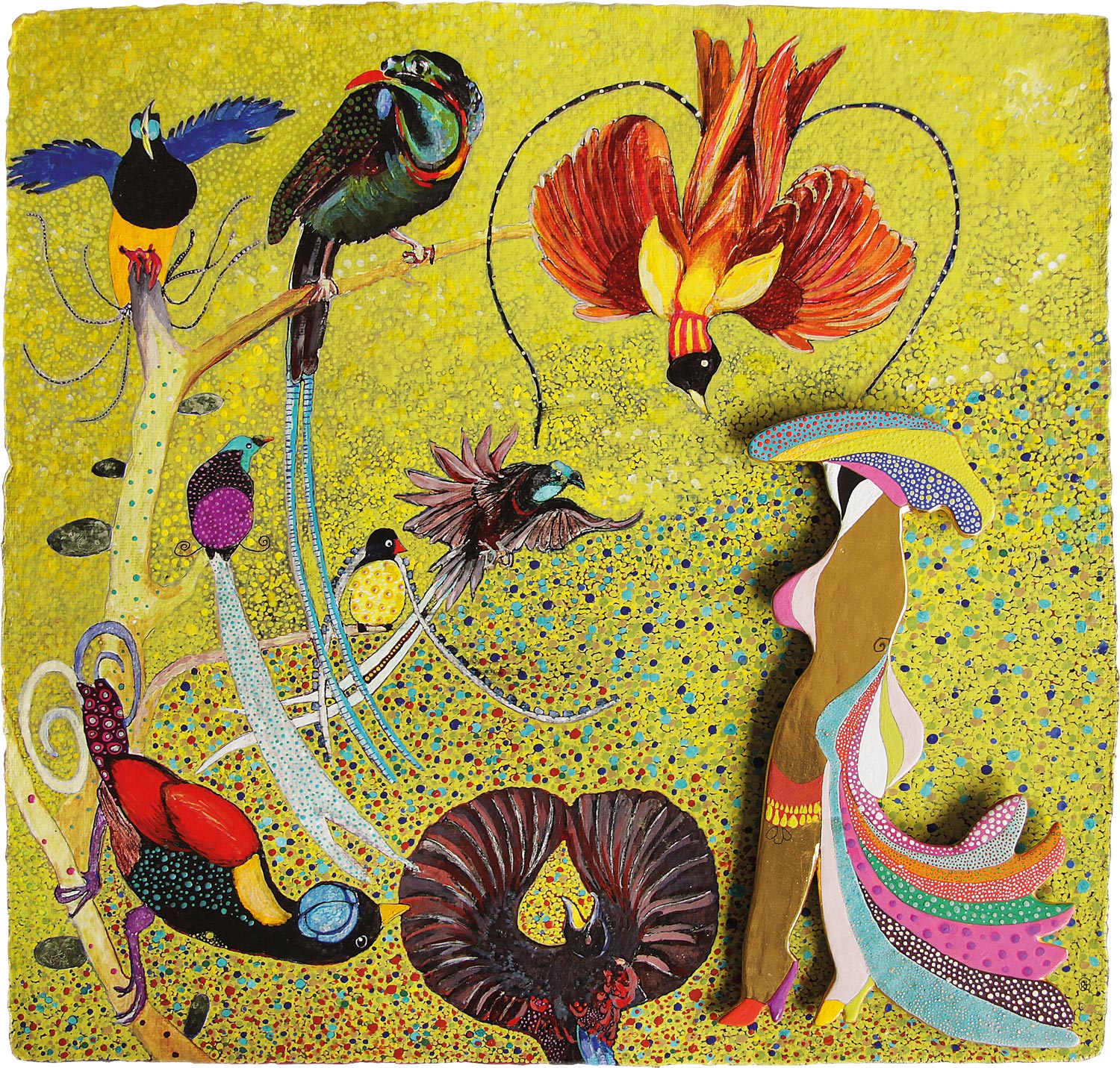
24 Karat Hand vergoldetes, halb plastisches Holzobjekt, 78 x 78 cm, Pigmente auf handgeschöpftem Bütten Karton, Museumsglas 2016
Gesichtslose weibliche Figur mit Federschleppe begegnet männlichen Paradiesvögeln (National Geographic).
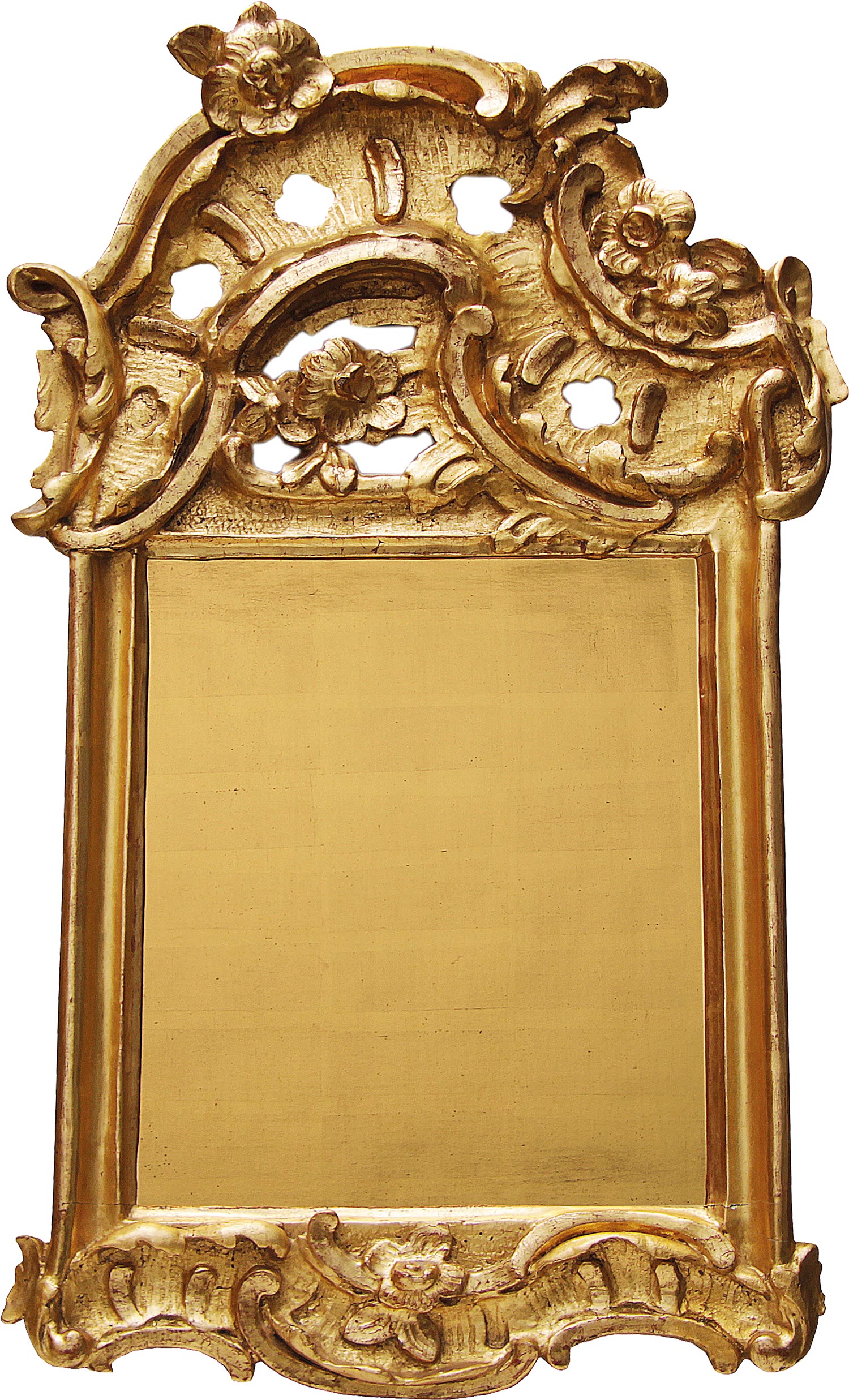
54 x 31 cm Spiegel wurde aus einem Barock-Rahmen entfernt und durch eine spiegelnde Poliment Vergoldung auf Holz, 24 Karat, ersetzt, 2015
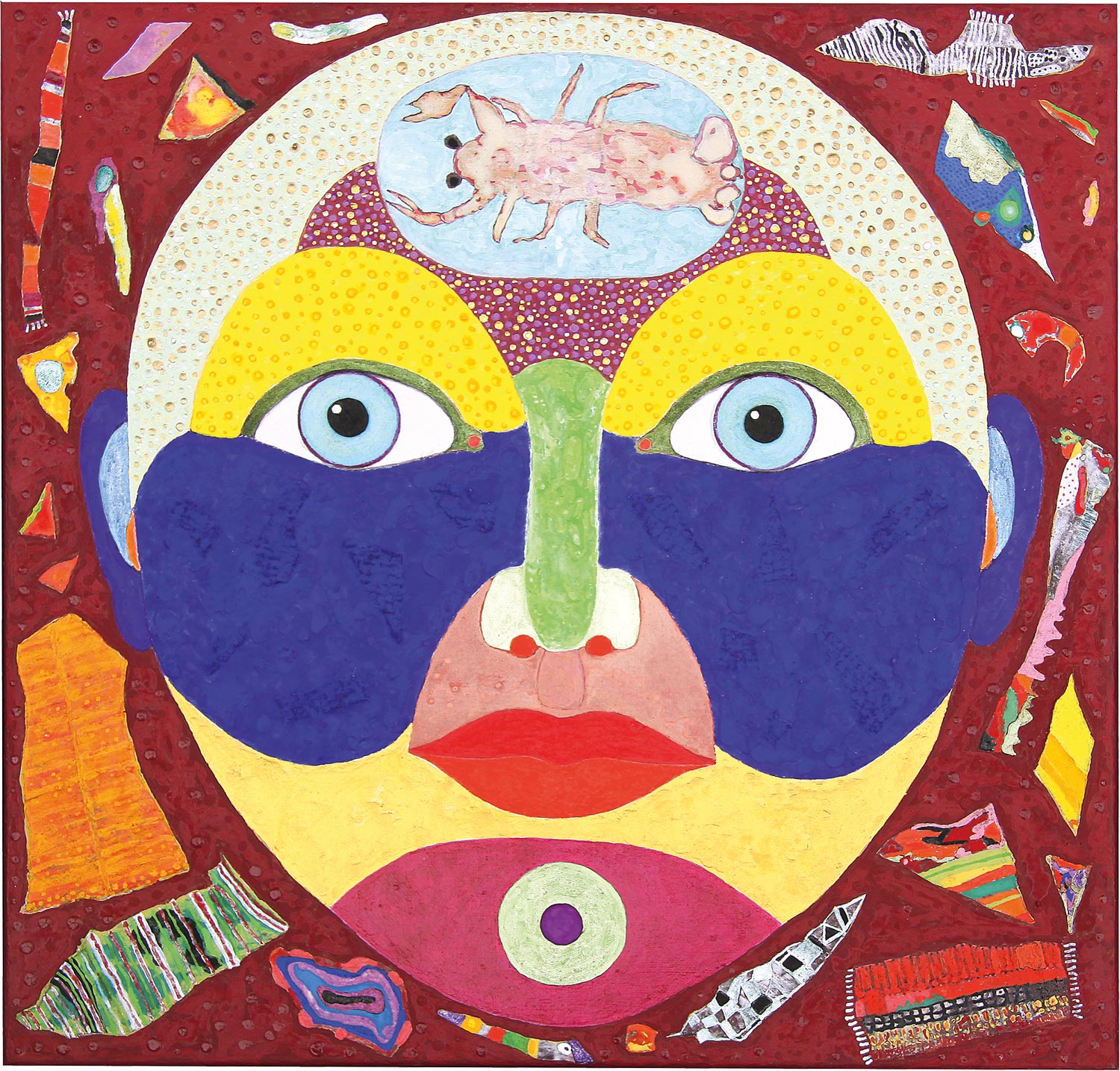
vi en su cara! 43 x 43 x 4 cm Pigmente, Aquarell, Muschelgold, getränkte Jute.auf Leinwand 2013/16
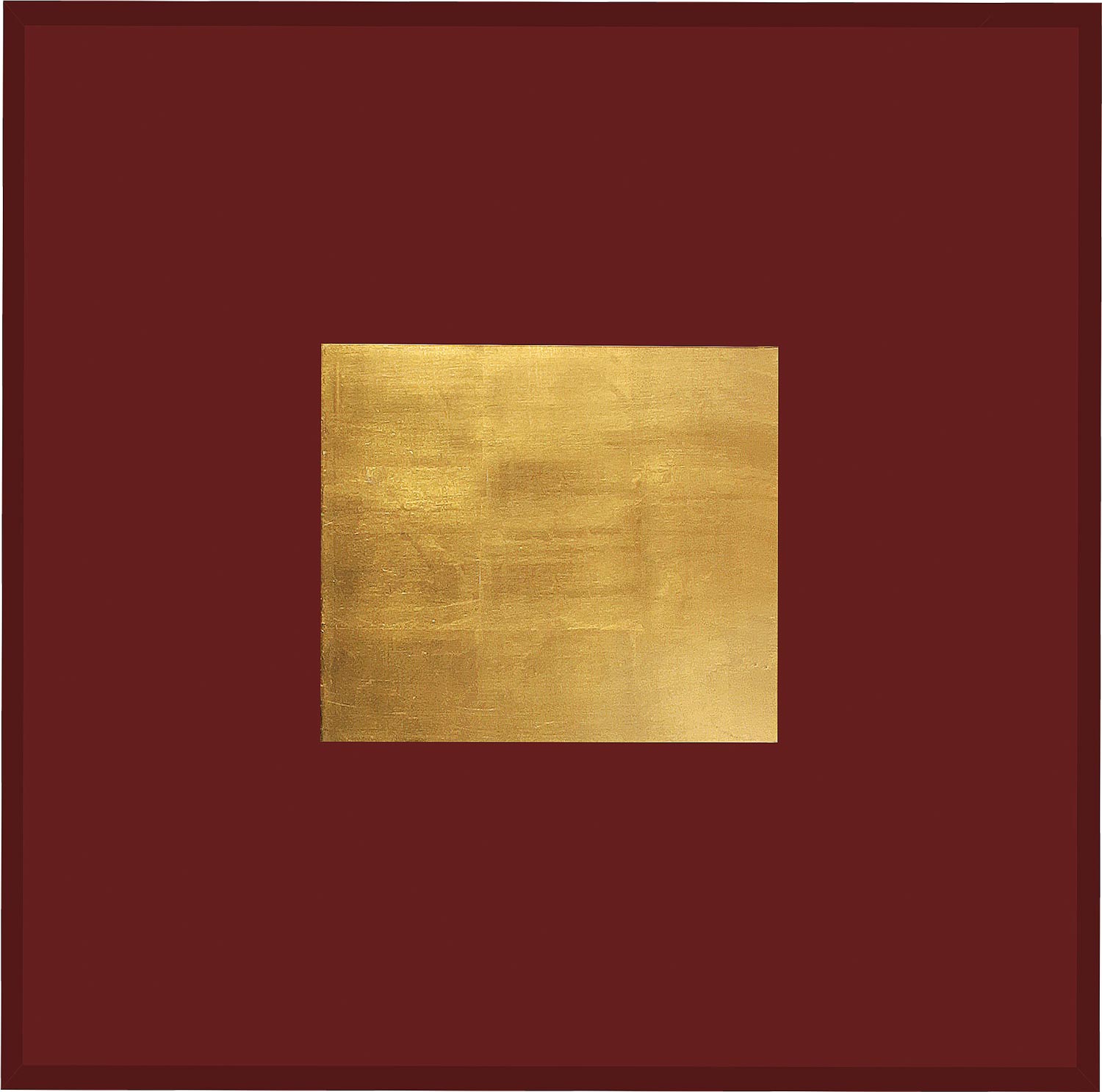
57 x 57 cm, ein angefertigter Stahlbehälter wurde 24 Karat Hand vergoldet. Auf bemaltem Holzkorpus, Museumsglas 2015. Handwerkliche Ausführung Ludwig Dunkel.
87 gesammelte Medienbeiträge über die Erfinder der Demokratie. In vergoldeter Stahlschachtel.
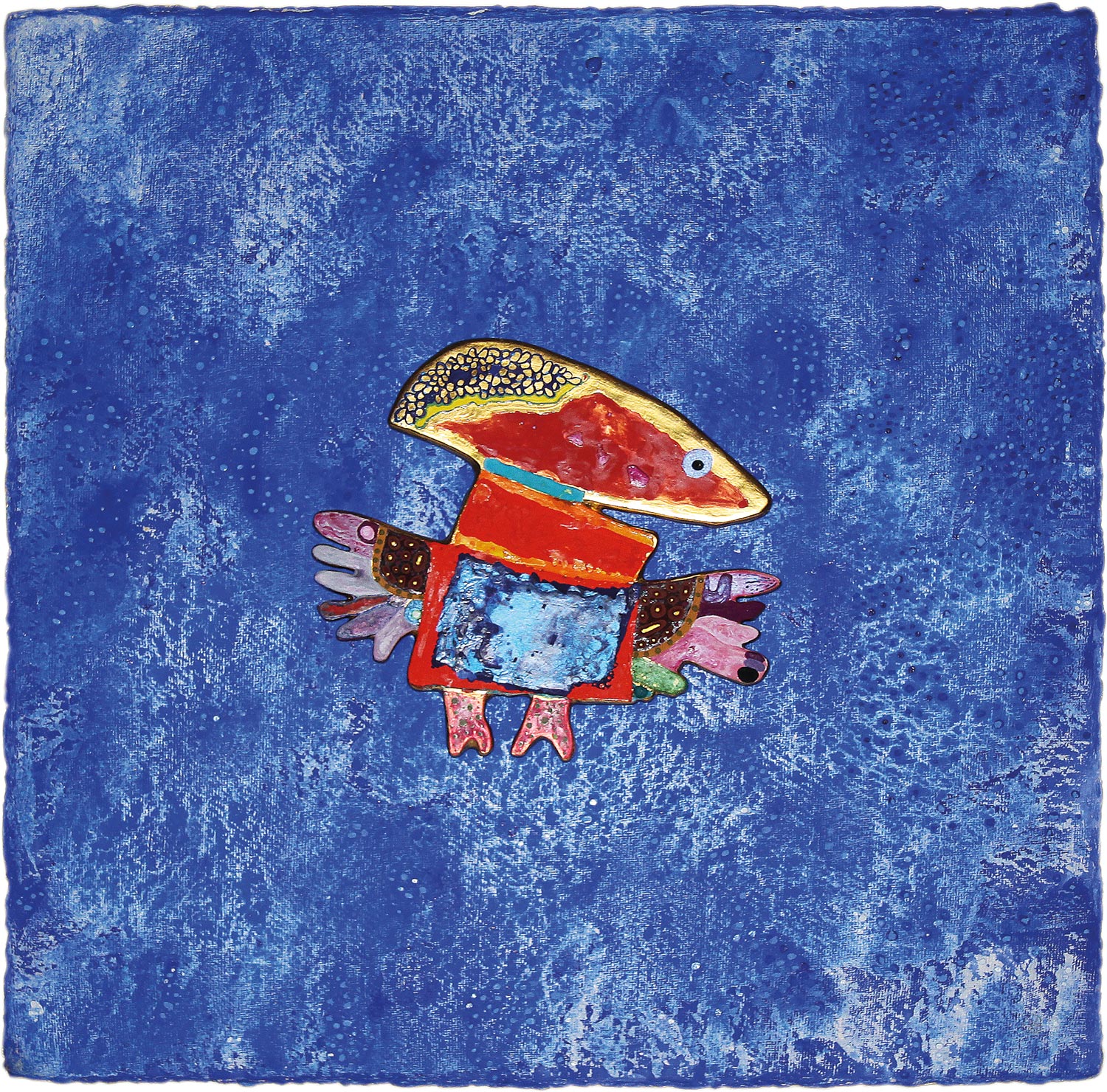
24 Karat Hand vergoldetes, halb plastisches Holzobjekt, 77 x 77 cm auf handgeschöpftem Bütten Karton, Objekt teilweise bemalt, Museumsglas 2015/16
Diverse Bedeutungen, erster Satellit 1997 USA, (Frühaufsteher) u. A.
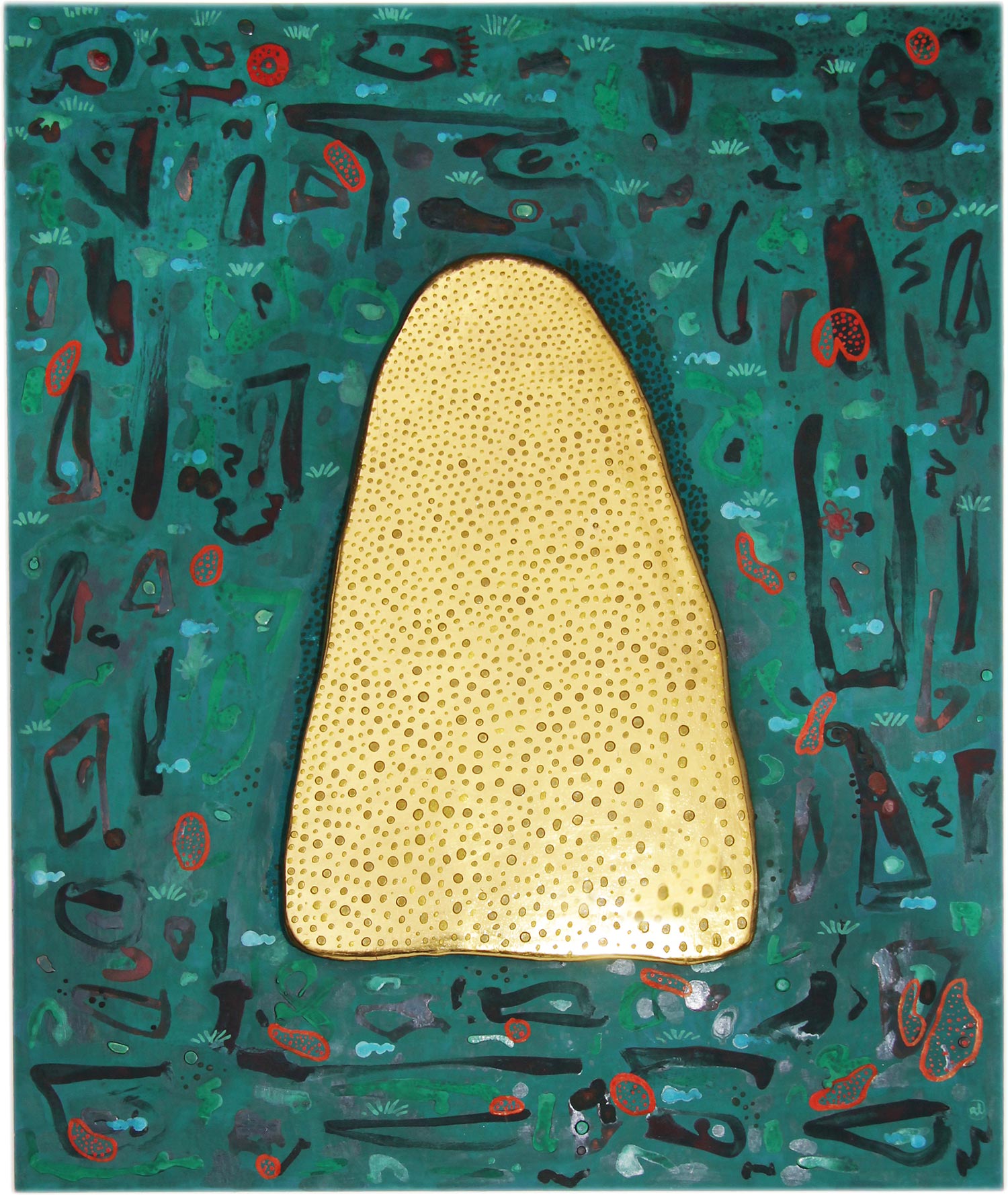
67 x 58 cm, 24 Karat Hand vergoldetes, halb plastisches Holzobjekt auf bemaltem Bütten Karton, Museumsglas 2014/15
48 x 60 cm, Pigment Malerei auf Karton, auf 24 Karat Goldgrund, Museumsglas 2015
Darstellung eines Fabeltieres aus Häusern
 Goldobjekte